
Last updated November 23, 2026
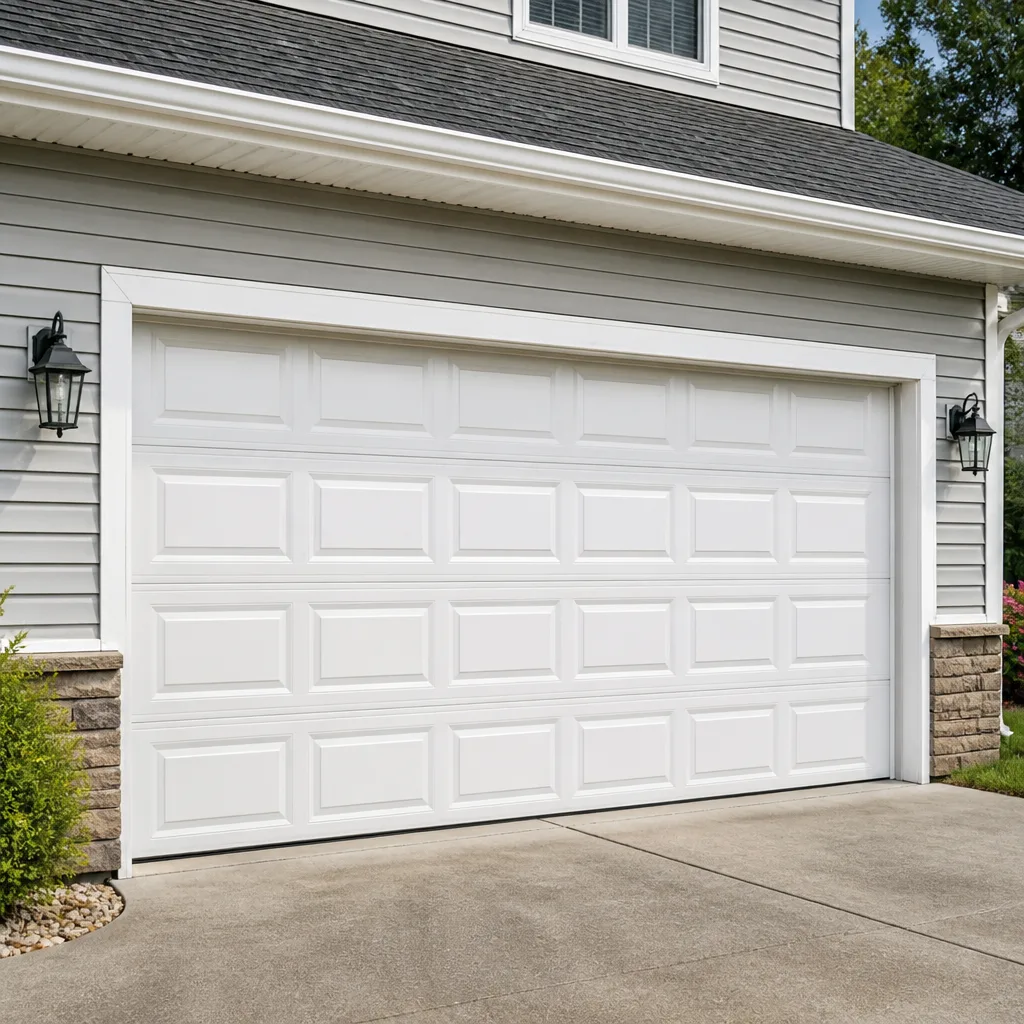 Raised-panel steel
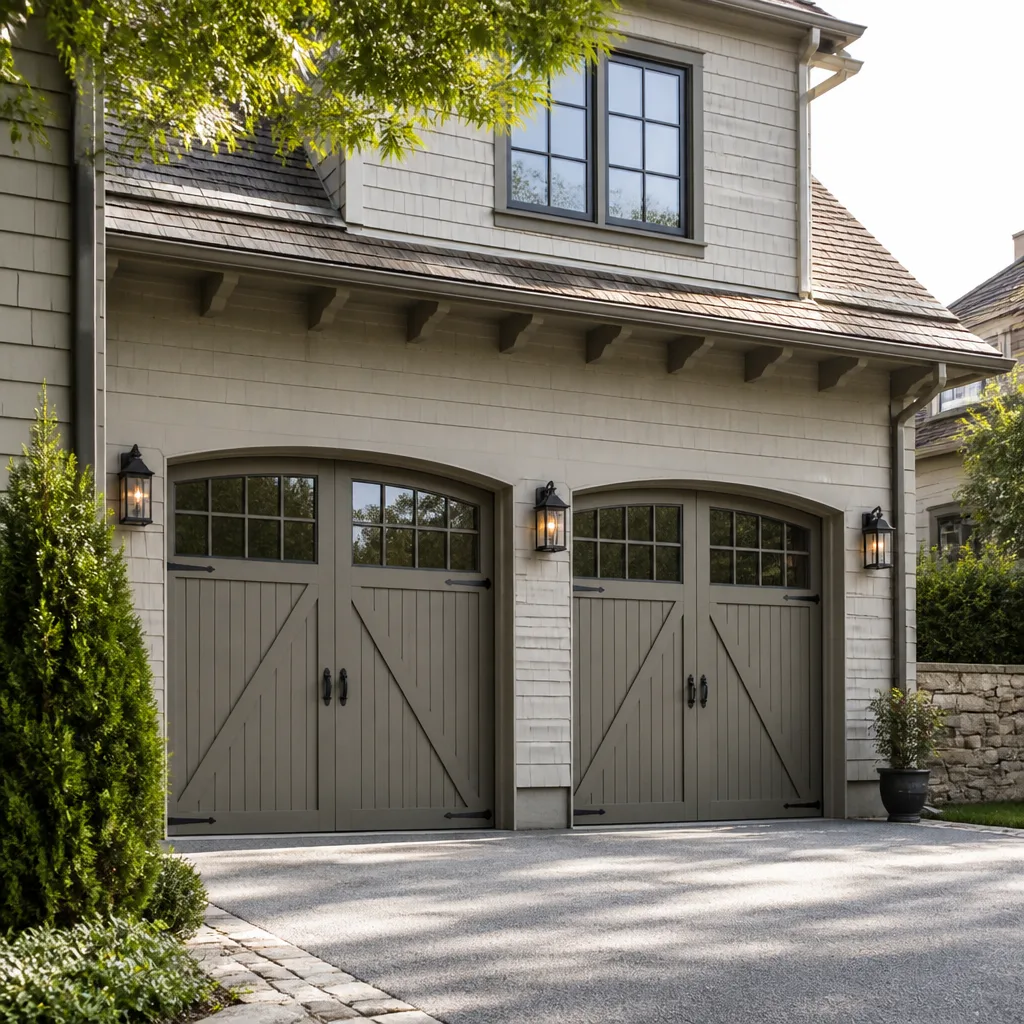 Carriage house
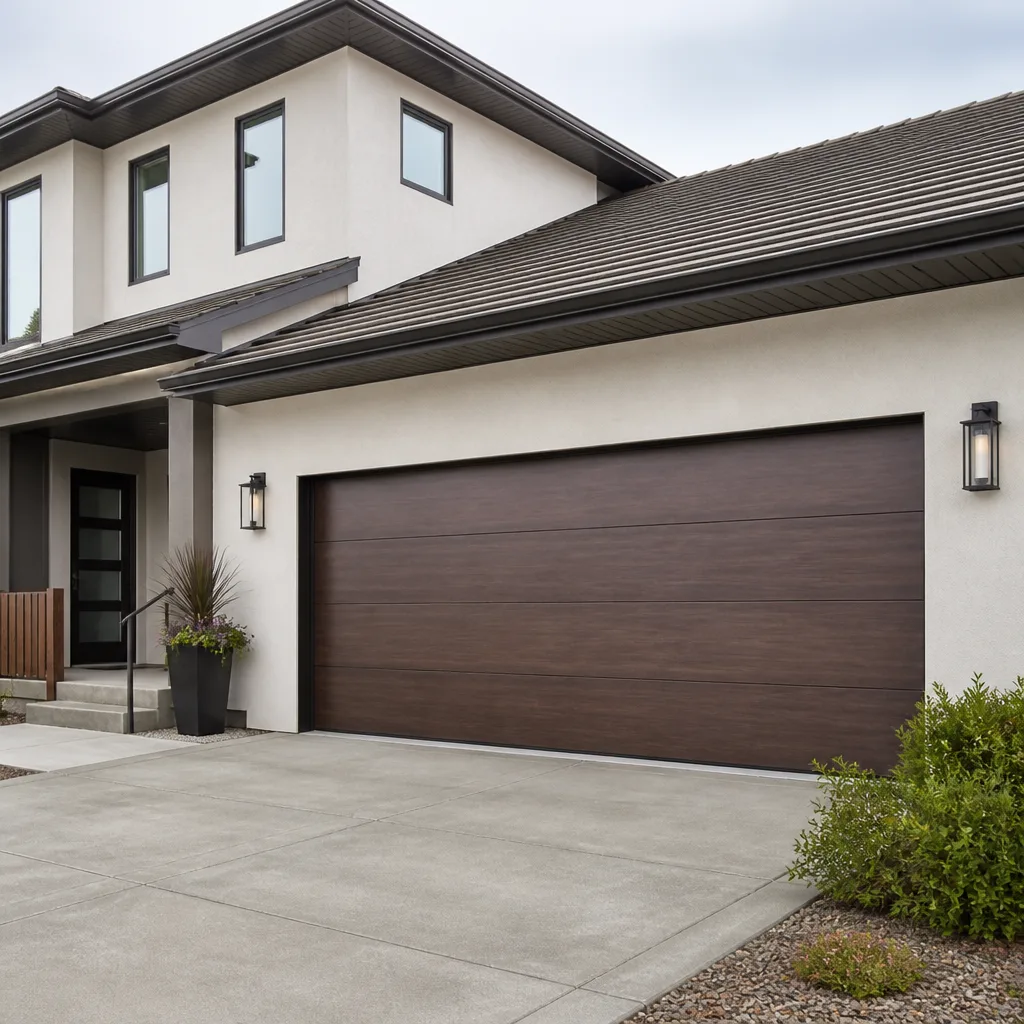 Modern flush
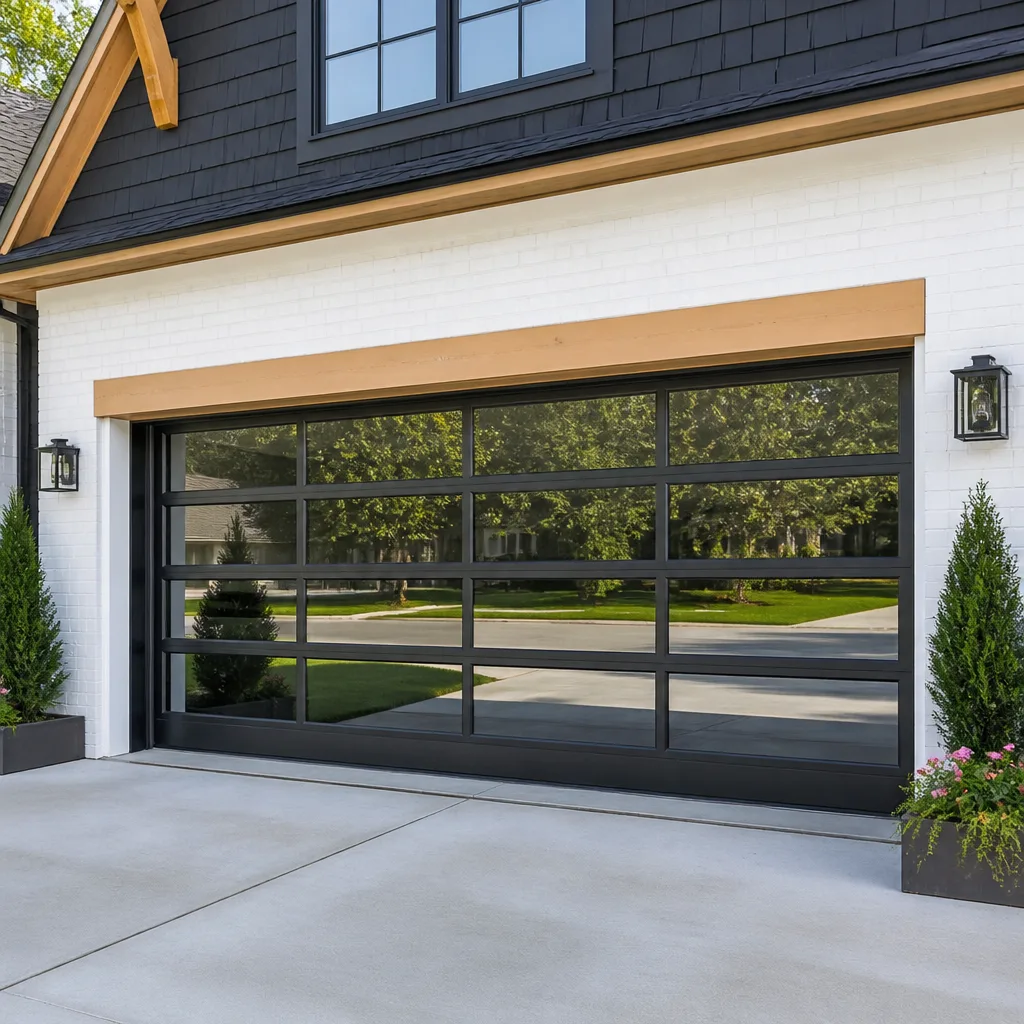 Full-view glass
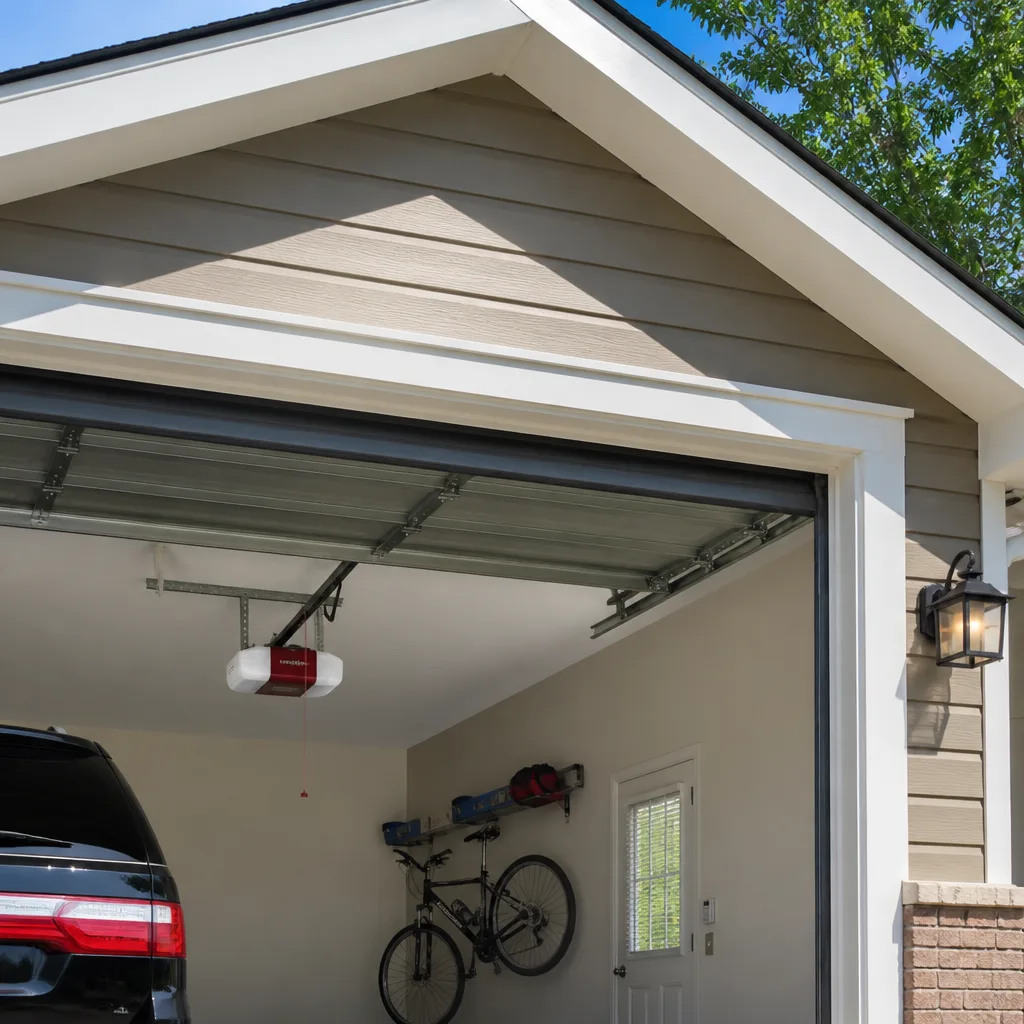 LiftMaster openers
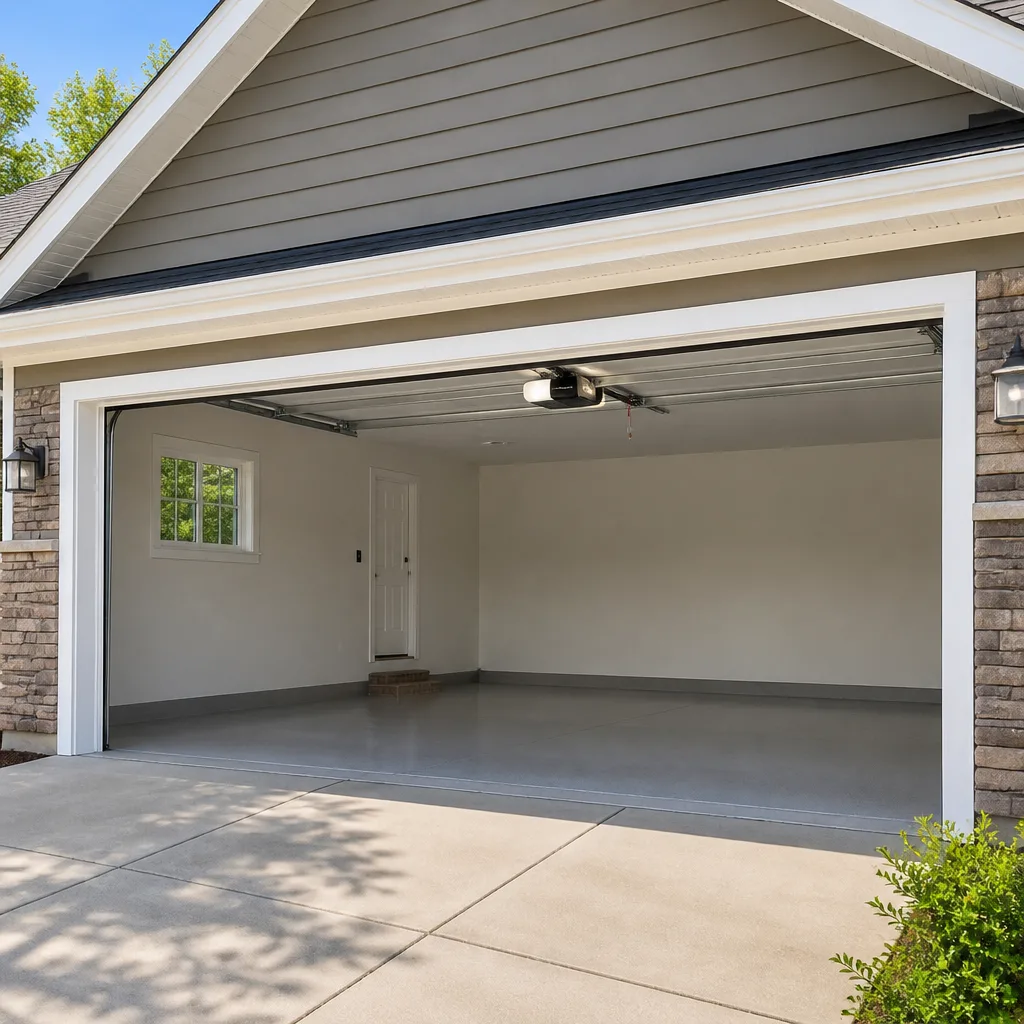 Chamberlain openers
Full 25-point door and opener safety check with every visit - springs, cables, rollers, tracks, and your LiftMaster or Chamberlain opener included
You get a price before we start. It does not change when the pro arrives.
Get your free estimateThe Complete Guide to Garage Doors in Manassas
Most homeowners think of their garage door as one thing: a big panel that goes up and down. It isn’t. A residential garage door is a system of six interdependent components – panels, springs, tracks, opener, cables, and weatherstripping – and each one fails on its own timeline. The average Manassas door cycles more than 1,500 times a year, more than any other moving part in the house, yet most owners can’t name three of its parts. That gap matters, because understanding how the system works is what separates a small repair from a full replacement. This guide maps every component, explains how Northern Virginia’s clay soil and humidity cycles affect alignment and hardware, covers which builder-grade makes and models dominate Manassas subdivisions, and gives you a clear framework for deciding when to repair and when to replace.
Quick Answer
A garage door in Manassas is a six-part mechanical system, and most failures trace back to the springs, cables, or opener rather than the panels. Regular inspection of those three components prevents the majority of emergency breakdowns, and repair is almost always the right call if the panels and structure are sound. Full replacement makes sense when the door is damaged beyond its hardware, when safety features are missing, or when repair costs approach the price of a new system. Call (855) 658-4207 for a free estimate from a team that works only on garage doors.
Styles & brands we work with
- Raised-panel steel
- Carriage house
- Modern flush
- Full-view glass
- LiftMaster openers
- Chamberlain openers
Table of Contents
- The Six Components of a Garage Door System
- How Long Each Component Lasts
- How Manassas Climate and Clay Soil Affect Your Door
- Common Garage Door Brands in Manassas Subdivisions
- Repair or Replace: A Decision Framework
- Manassas and Prince William County Permit Basics
- Seasonal Checks You Can Do Yourself
- Spring and Cable Safety
The Six Components of a Garage Door System
A garage door works only because six parts cooperate. When one weakens, the others take the strain, which is why a single snapped cable can throw a door off its track. Here’s what each component does and how it typically fails.
Panels. The door face itself. Steel panels are standard in Manassas homes, though some subdivisions have wood or composite doors. Panels fail through impact, rust at the bottom edge, or hinge separation over time. A single bent panel doesn’t always mean a new door, but a door with several cracked panels usually does.
Springs. Torsion springs mount above the door on a shaft; extension springs run along the sides. They counterbalance the door’s weight so a person or opener can lift it. Springs are the most common failure in the system, and they’re the part that requires trained handling. To understand this work in detail, see garage door spring repair.
Tracks. The metal rails that guide the door up and down. Tracks bend when a door comes off them or when a car clips one. A bent track forces every other component to work harder.
Opener. The motor unit that drives the door, along with its rail, belt or chain, and safety sensors. Openers fail through gear wear, sensor misalignment, or circuit-board problems. That’s a separate line of work we cover under garage door opener repair.
Cables. Steel cables connect the springs to the bottom corners of the door. They’re under extreme tension and fray over time. A frayed cable is a safety matter, not a nuisance.
Weatherstripping. The bottom seal, side seals, and top seal keep out water, wind, and pests. In Manassas, a hard, cracked bottom seal lets water pool along the sill, which feeds rust at the door’s base.
Understanding these six parts is the foundation of any smart money decision on a garage door in Manassas. Once you know which part is failing, the repair-versus-replace question gets much easier.
How Long Each Component Lasts
Lifespans vary with use, but the ranges below reflect what we see on Manassas doors on a normal cycle. Use them as a rough schedule for planning, not a guarantee.
- Torsion springs: the workhorse of the system. Counted in cycles rather than years, and the part that wears fastest because it carries the full door weight.
- Extension springs: also cycle-limited, and typically the first to show visible stretch or gap.
- Cables: several years of service before fraying appears near the drum or bottom bracket.
- Rollers and hinges: wear gradually, and the first sign is noise and wobble.
- Opener motor: a long service life, though belts and chains stretch and gear kits wear out before the motor dies.
- Weatherstripping: the shortest-lived soft part, hardening with sun and temperature swings.
- Steel panels: the longest-lived component when rust is kept away from the bottom edge.
Here’s the important part: springs and cables don’t fail because of age alone. They fail because of cycle count. A door in a busy Manassas household that runs several times a day wears its springs faster than a door that opens once a morning. That’s why we inspect cycle wear rather than just looking at a calendar.
How Manassas Climate and Clay Soil Affect Your Door
Manassas sits in a humid, four-season climate on soil heavy with clay. That combination does things to a garage door that a dry-climate guide won’t mention.
Clay soil and door alignment
Clay soil expands when wet and shrinks when dry, and this part of Northern Virginia swings between both. That movement shifts slabs and foundations slightly over the seasons. A garage slab that rises or settles by a fraction of an inch can pull the door frame out of square, which shows up as a door that binds, gaps at one corner, or drags on the floor. If your door started rubbing after a wet spring or a dry summer, soil movement is a likely reason.
Humidity cycles and corrosion
Humid summers and freezing winters push steel hardware through repeated wet-dry and freeze-thaw cycles. Springs rust, hinges stiffen, and the bottom edge of a steel door is the first place to show bubbling paint. Regular lubrication and a quick wipe of the bottom seal keep corrosion from getting ahead of you.
Temperature and spring tension
Cold contracts steel and increases spring tension; heat does the opposite. It’s common for a door to feel stiffer in January and looser in July. Sharp temperature swings can also be the moment an already-worn spring finally lets go. Keep the hardware lubricated and have tension checked before winter sets in.
Common Garage Door Brands in Manassas Subdivisions
Most Manassas subdivisions were built with builder-grade doors, and the same brands show up again and again. Knowing what’s on your garage makes parts and service faster, because a specialist can identify the model rather than guessing.
You’ll see Clopay and Amarr steel doors throughout Prince William County builder installs. LiftMaster and Chamberlain openers are the most common motor units, with Craftsman and Genie showing up on older homes and Raynor doors on some of the larger builds. The point isn’t the logo – it’s that parts availability and repair know-how differ by brand. A specialist familiar with all eight major lines, from LiftMaster and Chamberlain through Clopay, Amarr, Wayne Dalton, Craftsman, and Raynor, can service whatever is already on your garage instead of steering you toward one preferred product.
Builder-grade doors have their own quirks. They often use standard panel sizes and common spring gauges, which is good for parts availability. But builder installs also tend to skip the higher-cycle springs, so they wear out sooner than a homeowner might expect. If your door came with the house and the springs have already been replaced once, the rest of the hardware is usually close behind. Understanding your brand and model makes a real garage door repair conversation easier, because everyone starts from the same facts.
Repair or Replace: A Decision Framework
The single biggest money question on any garage door is whether to repair a part or replace the system. Here’s how to think it through in order.
- Is the failure in the hardware or the door? Springs, cables, tracks, rollers, and the opener are hardware. If the panels are sound, that’s a repair.
- How many components have failed at once? One worn spring is a repair. Springs, cables, and track damage together on a door with rusted panels usually points toward replacement.
- Are the panels structurally sound? Several cracked or badly rusted panels, or a door that’s been hit by a car, can push repair cost toward the price of a new door.
- Does the door have modern safety features? An opener without functioning safety sensors on a door that’s driven by an old motor is worth upgrading as a system.
- Is the mismatch making things worse? A new opener on tired springs works the springs harder. If you’re replacing one, weigh the other.
Our rule of thumb: if the repair keeps the existing door and its structure, it’s almost always the sensible call. When the door’s panels are failing at the same time the hardware is, replacement is the honest answer. A specialist will tell you which side of that line you’re on. We do, because it’s the only trade we work in. Manassas Garage Door Repair Pros is happy to walk through the options with a free estimate before you decide.
Manassas and Prince William County Permit Basics
Permit rules are one of the most misunderstood parts of garage door work, and general guides often skip it entirely.
- Straight repair or part replacement – springs, cables, rollers, weatherstripping, opener – typically does not require a permit.
- Full door replacement often triggers a permit in this area because it’s treated as an alteration to the structure.
- Structural changes to the opening, header, or frame definitely need approval before work starts.
Rules can shift, so confirm with the City of Manassas or Prince William County building department before any structural change or full replacement. Ask about the specific door and opening; a quick phone call answers it for your address. A specialist will know how to pull the right approvals so the job is clean when it’s inspected.
Seasonal Checks You Can Do Yourself
You can prevent a lot of breakdowns with a simple routine. None of it involves touching the springs or cables.
- Listen to the door. Grinding, squealing, or banging points to rollers, hinges, or a track issue.
- Test the balance. With the door closed and the opener disconnected, lift it partway. It should hold without help. If it drops or won’t stay, spring tension needs a professional look.
- Lubricate moving parts. Rollers, hinges, and the track receive a light silicone spray; springs and cables should be left to a technician.
- Inspect the weatherstripping. Check the bottom seal for cracks or gaps that let water in.
- Clear the tracks. Wipe out dirt and debris; never force a bent track back into shape.
- Test the safety sensors. Put an object in the door’s path and confirm it reverses.
If the door feels heavier than usual, binds at one point, or hesitates, stop using it and have it checked. Those are early warnings, and catching them early is the difference between a small fix and a bigger one.
Spring and Cable Safety
Springs and cables sit under extreme tension, and that makes them the one part of the system you should never handle yourself. A torsion spring or a tensioned cable can release with enough force to cause serious injury, and the tools and technique needed to release and reset that tension are specific to the trade. This isn’t a warning we take lightly. It’s the reason spring repair is a core part of what we do rather than a sideline. If you suspect a broken spring or see a frayed cable, don’t try to open the door manually and don’t reach for the hardware – call a trained technician and keep people clear until it’s inspected.
Common Mistakes to Avoid
- Treating the components as one unit. A door that won’t open isn’t automatically a door problem; it’s usually a spring, cable, or opener problem, and replacing the door to fix a $150 part is a costly mistake. Diagnose the part first.
- Ignoring a small gap at one corner. In Manassas, clay soil movement often produces a slight frame shift, and a door that binds at one corner will wear its springs and rollers faster. Have the alignment checked early.
- Skipping lubrication because the door “still works.” Dry, rusty hardware wears faster through Northern Virginia’s humidity swings. A regular silicone spray on rollers and hinges keeps corrosion from getting ahead of you.
- Forcing a bent track back into shape. A track is a precision guide; once it’s bent, forcing it usually makes the door bind worse and strains every other component.
- Assuming a permit isn’t needed for a full replacement. Many Manassas homeowners skip this step and discover the issue later. Ask the building department before any structural change or full door replacement.
- Replacing the opener without checking the springs. A new motor working against weak springs wears out faster and leaves the real problem in place. Look at the whole system, not just the part that died.
- Patching a rusted bottom panel instead of addressing the seal. Rust starts where water gets in, and a hidden cracked bottom seal will keep feeding it no matter how many patches you apply.
See the difference
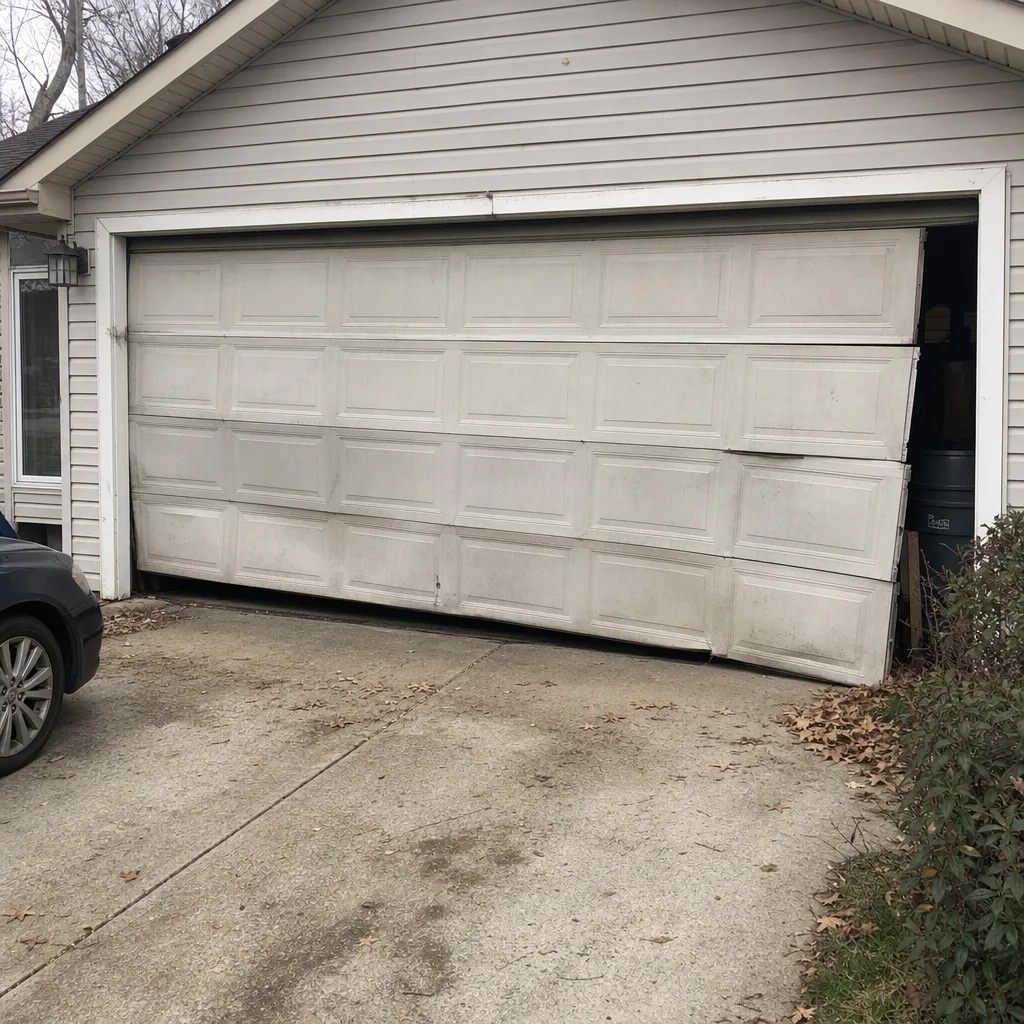 Before
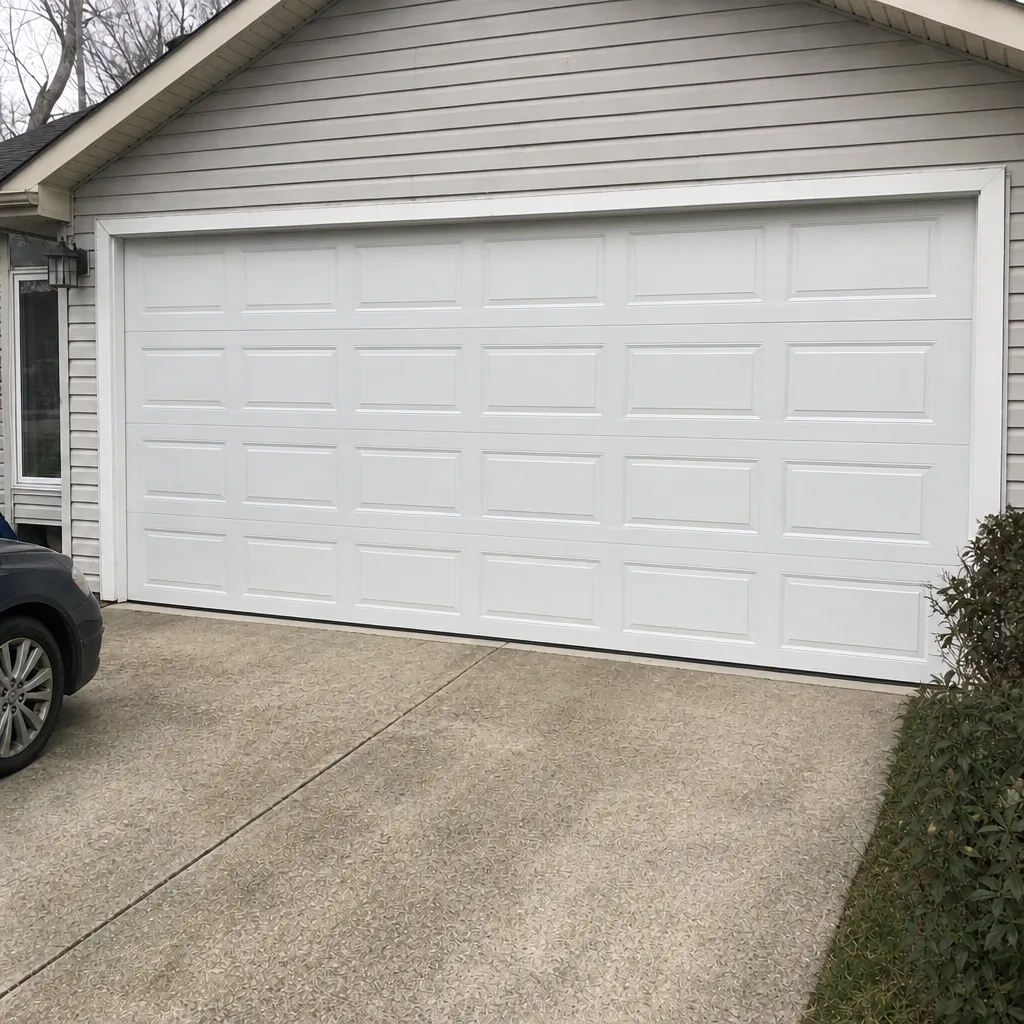 After
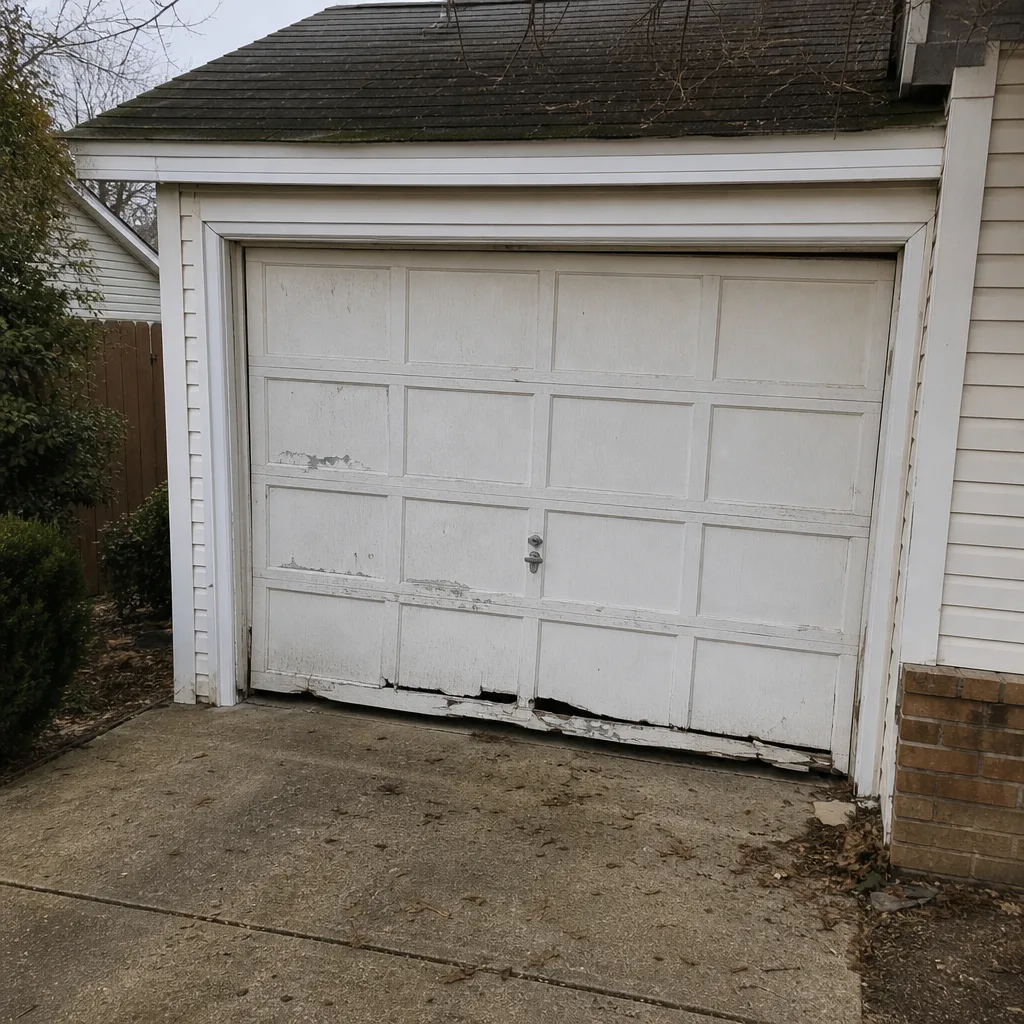 Before
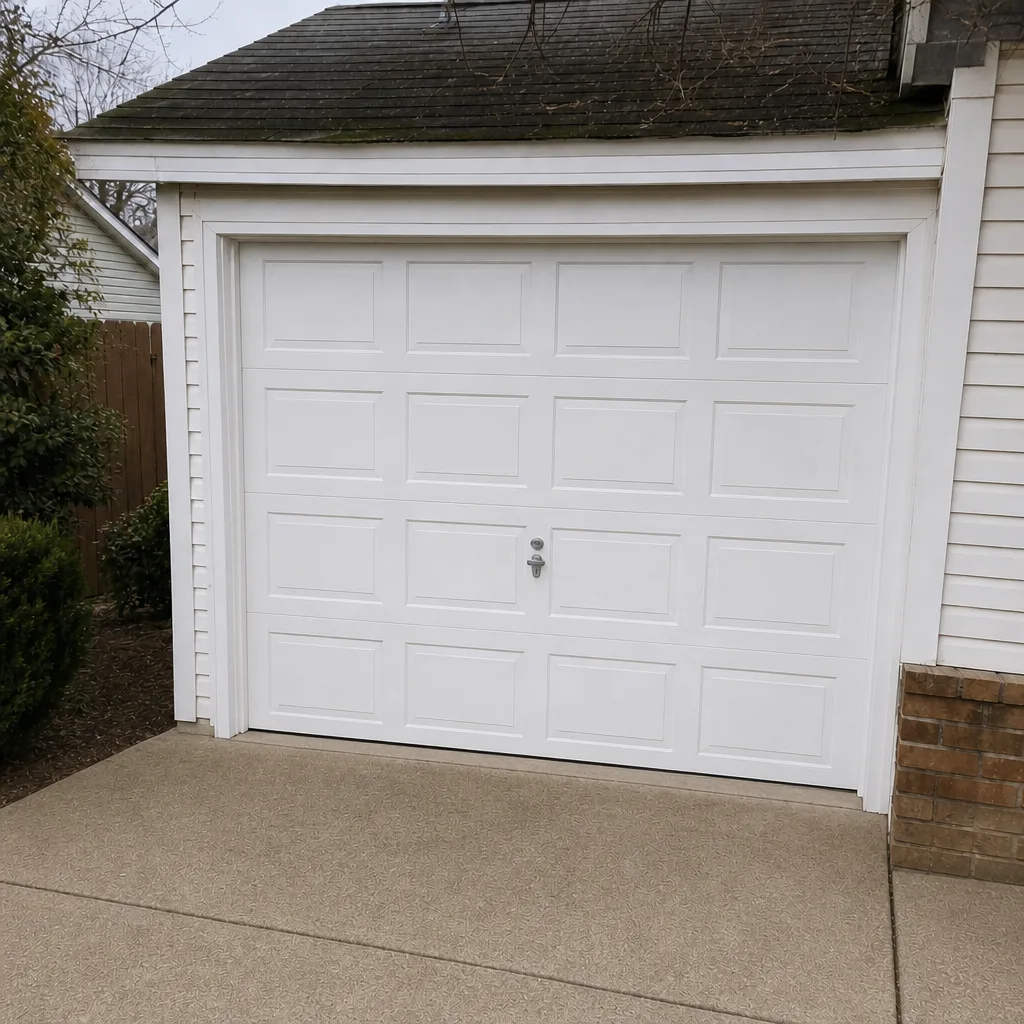 After
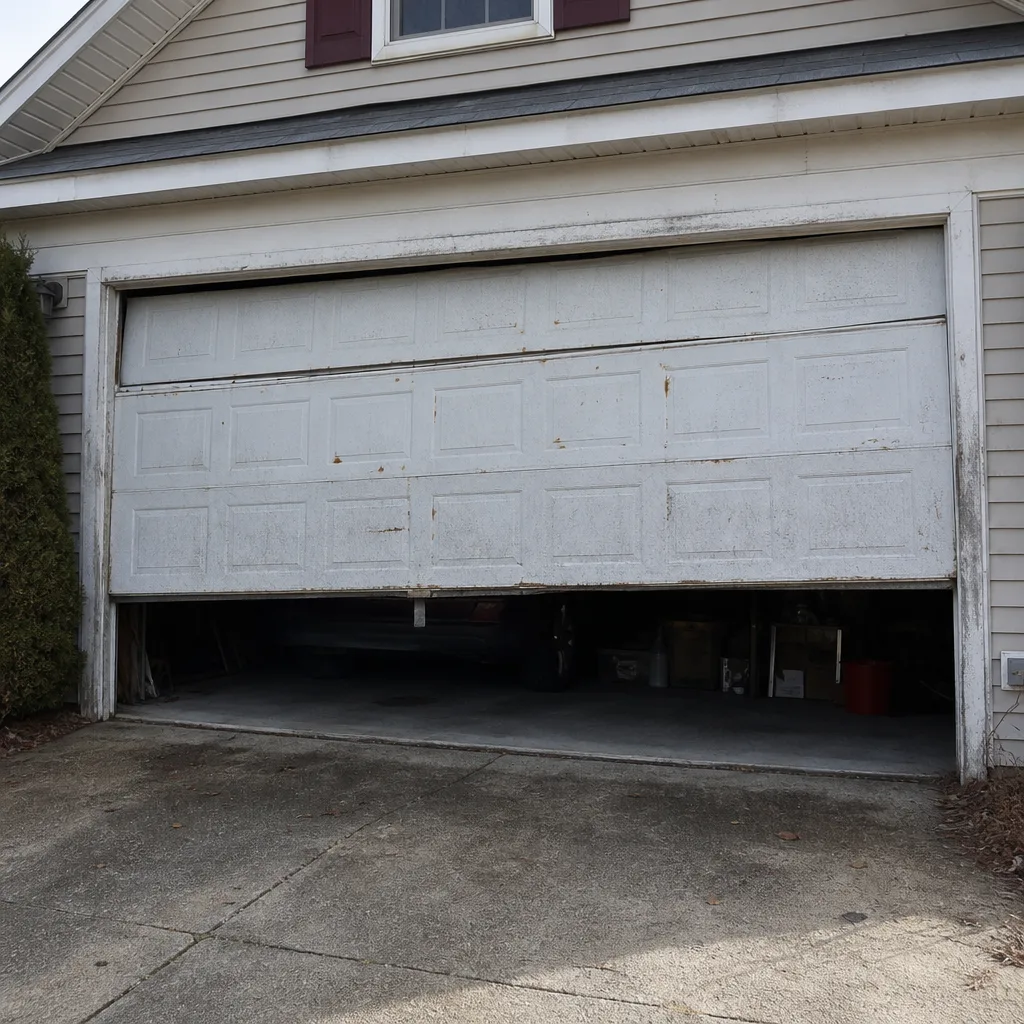 Before
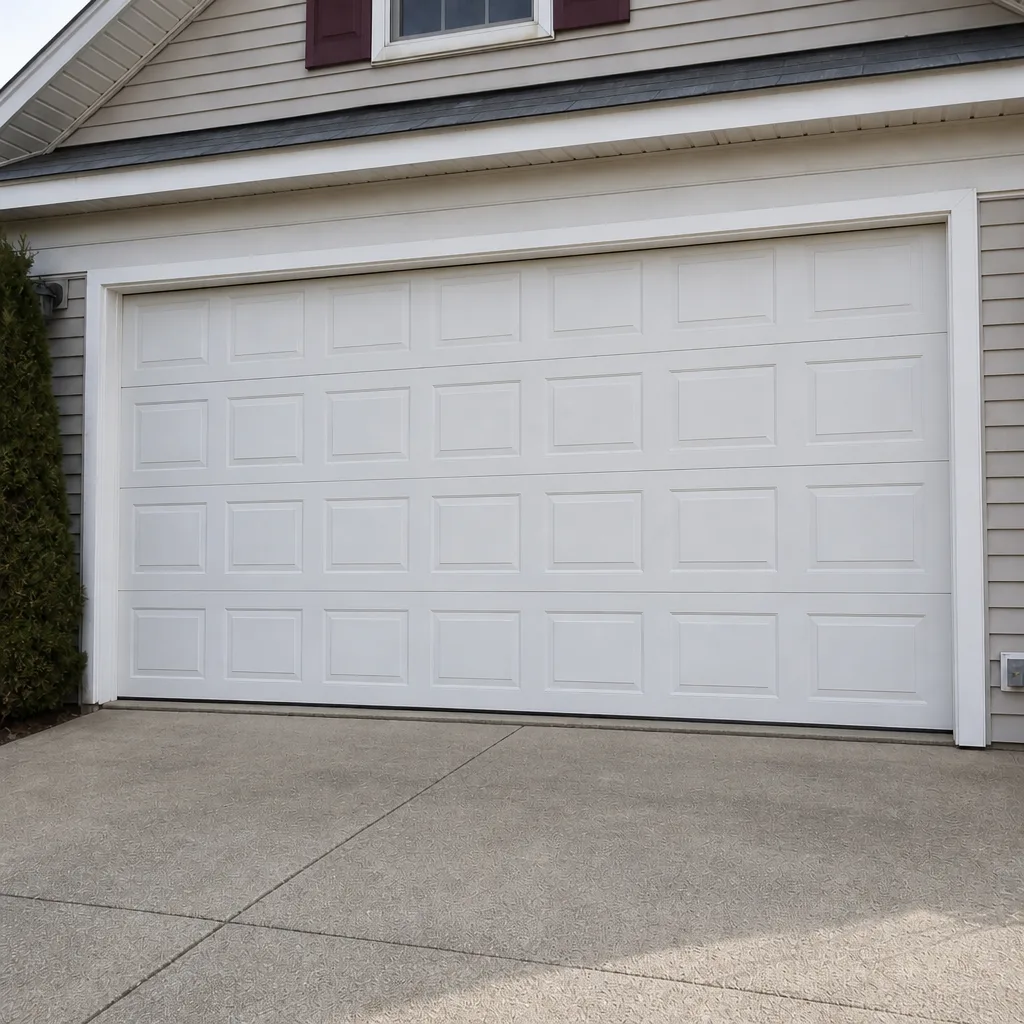 After
When to Call a Professional
Some jobs are obvious: a snapped spring, a door off its track, a frayed cable, or an opener that hums but doesn’t move. Others are subtler and still worth a call – a door that binds at one spot, a gap that appears after a wet season, or hardware that’s started to squeal. Springs and cables always belong in professional hands; there’s no safe DIY version of that work. If you’re weighing repair against replacement, a professional eye on the whole system saves money, because the decision turns on facts, not guesses. Manassas Garage Door Repair Pros offers free estimates in Manassas – call (855) 658-4207. We answer 24/7. Fast dispatch from 7am to 7pm, Sunday through Friday.
Frequently Asked Questions
The six core components are panels, springs, tracks, the opener, cables, and weatherstripping. Each fails on its own timeline, which is why diagnosing the failing part first matters more than replacing the whole door. Call (855) 658-4207 for help identifying what’s wrong.
Springs are measured in cycles, not years, and they wear faster on a door that runs often. In our experience, a busy Manassas household uses up springs sooner than a home where the door opens once a morning, which is why we check cycle wear rather than age alone. Call (855) 658-4207 to have your springs inspected.
Yes. Clay soil movement shifts door frames out of square over wet and dry seasons, and humid summers combined with freezing winters speed up corrosion on springs and hinges. A door that started binding after a season change is a common sign of this. Call (855) 658-4207 for a free inspection.
Straight repairs usually don’t, but a full door replacement or any structural change often triggers a permit. Confirm with the City of Manassas or Prince William County building department before the work starts, since rules can change. Call (855) 658-4207 if you want help sorting it out before you schedule.
Builder-grade Clopay and Amarr doors, along with LiftMaster and Chamberlain openers, are the most common in Manassas subdivisions, with Craftsman, Genie, Raynor, and Wayne Dalton showing up on other homes. A specialist who works across all eight major brands can service whatever you already own. Call (855) 658-4207 to talk about your brand.
Repair is the right call when the failure is in the hardware and the panels are sound; replacement makes sense when the panels are failing alongside the hardware or safety features are missing. That first step – identifying the failing part – is what a professional estimate settles quickly. Call (855) 658-4207. We answer 24/7. Fast dispatch from 7am to 7pm, Sunday through Friday.
The Bottom Line
Your garage door is a six-part system, not a single unit, and the smart money decision on any garage door in Manassas starts with identifying which part is failing. Springs and cables are the safety-critical pieces and belong in trained hands; panels and hardware decide whether a repair makes sense or a replacement does. Our clay soil, humidity swings, and builder-grade installs all shape what wears first. Treat the door as a system, do the simple checks, and call in a specialist for anything involving springs, cables, or a binding door. From a single snapped cable to a full new door, that’s the whole job. Manassas Garage Door Repair Pros specializes in garage doors and nothing else, works with every major brand, and covers the full lifecycle of repair and installation. Call (855) 658-4207 for a free estimate. We answer 24/7. Fast dispatch from 7am to 7pm, Sunday through Friday.
Written by the team at Manassas Garage Door Repair Pros.