
Last updated November 23, 2026
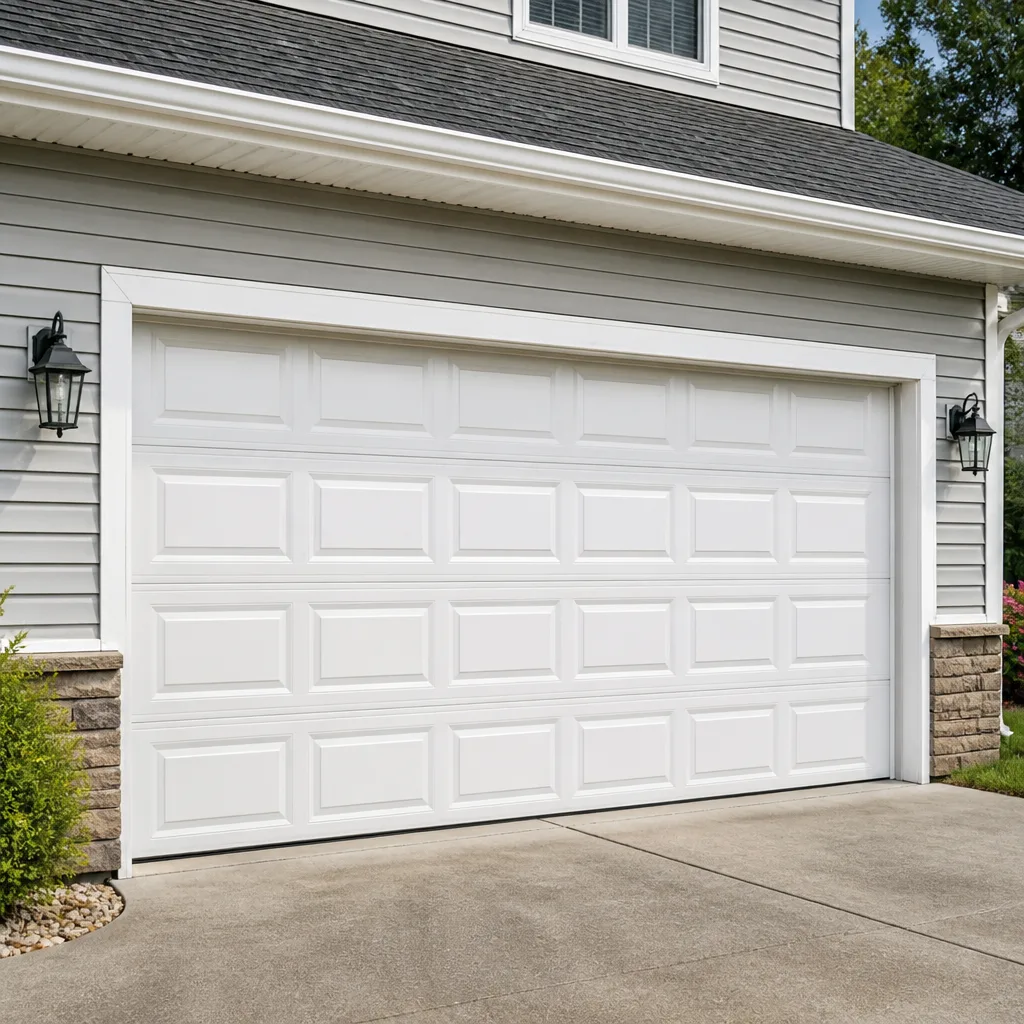 Raised-panel steel
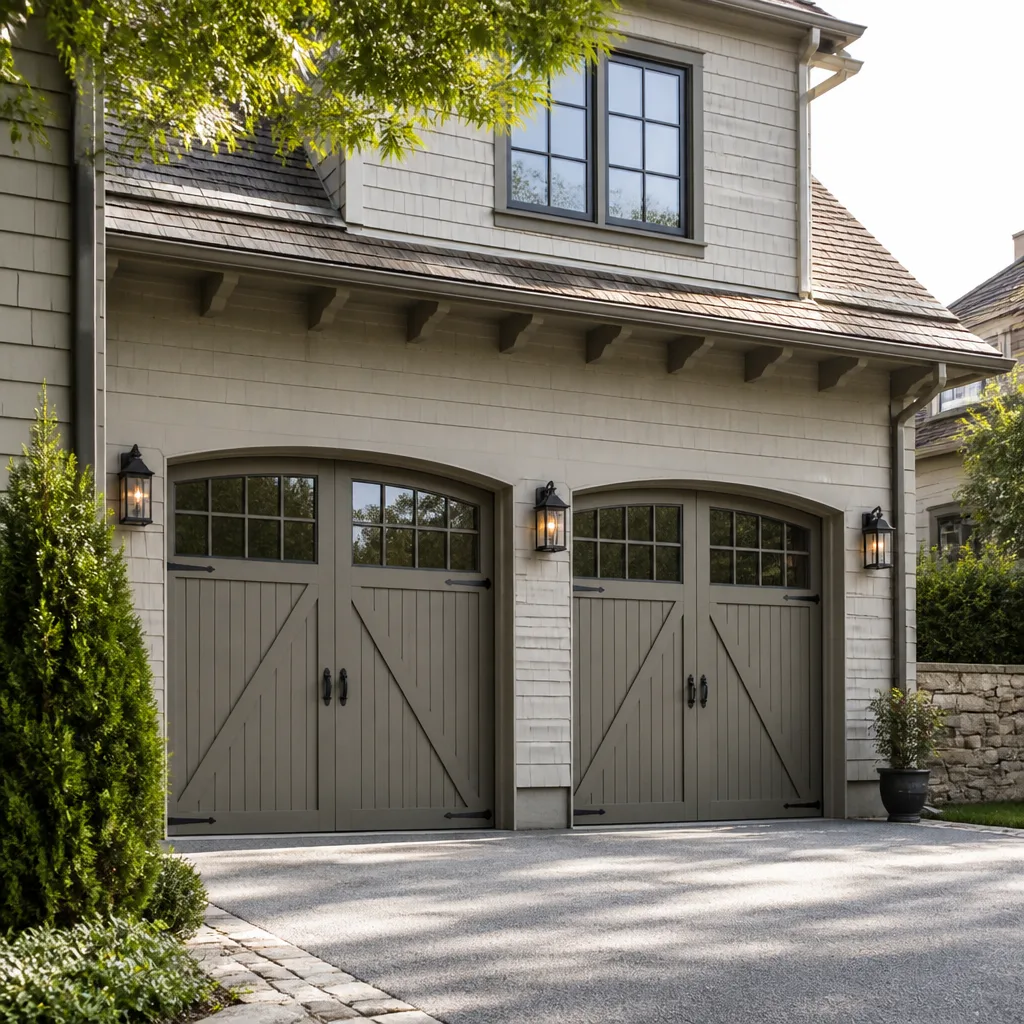 Carriage house
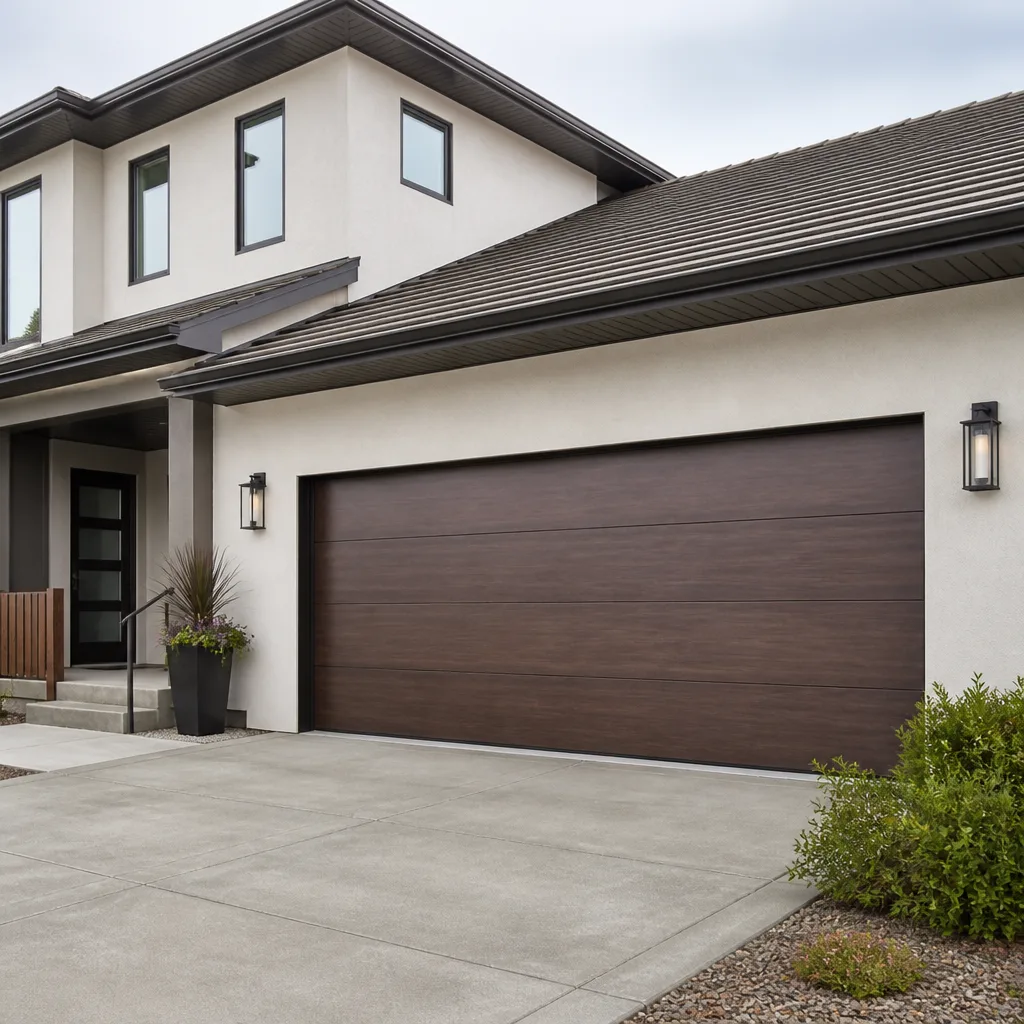 Modern flush
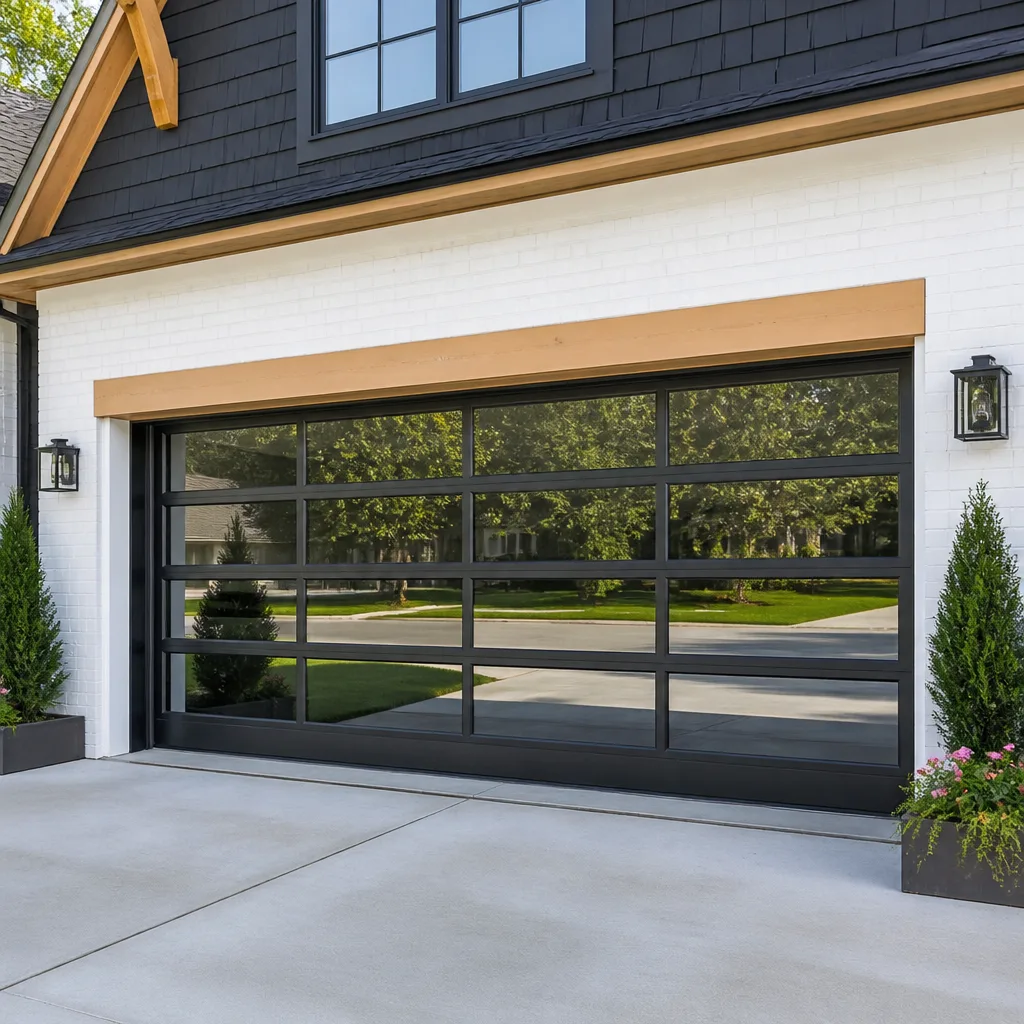 Full-view glass
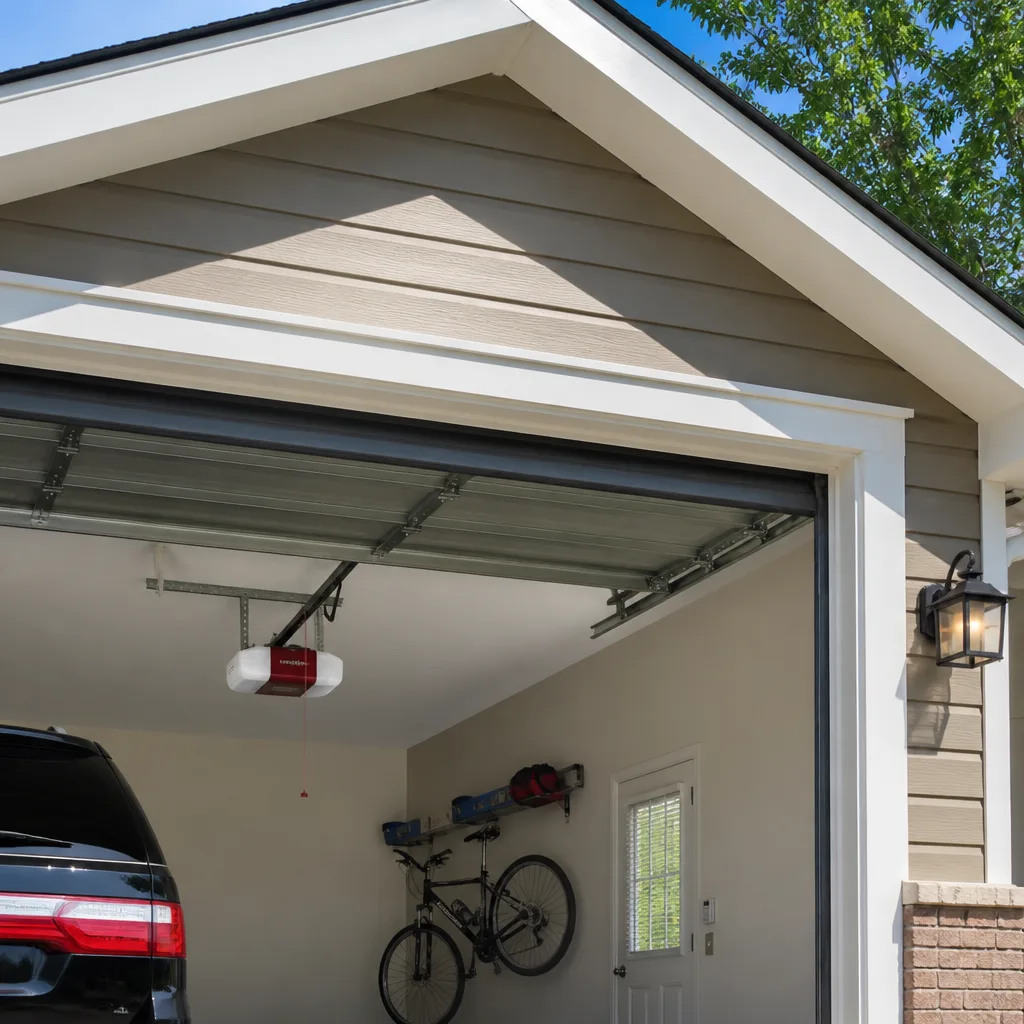 LiftMaster openers
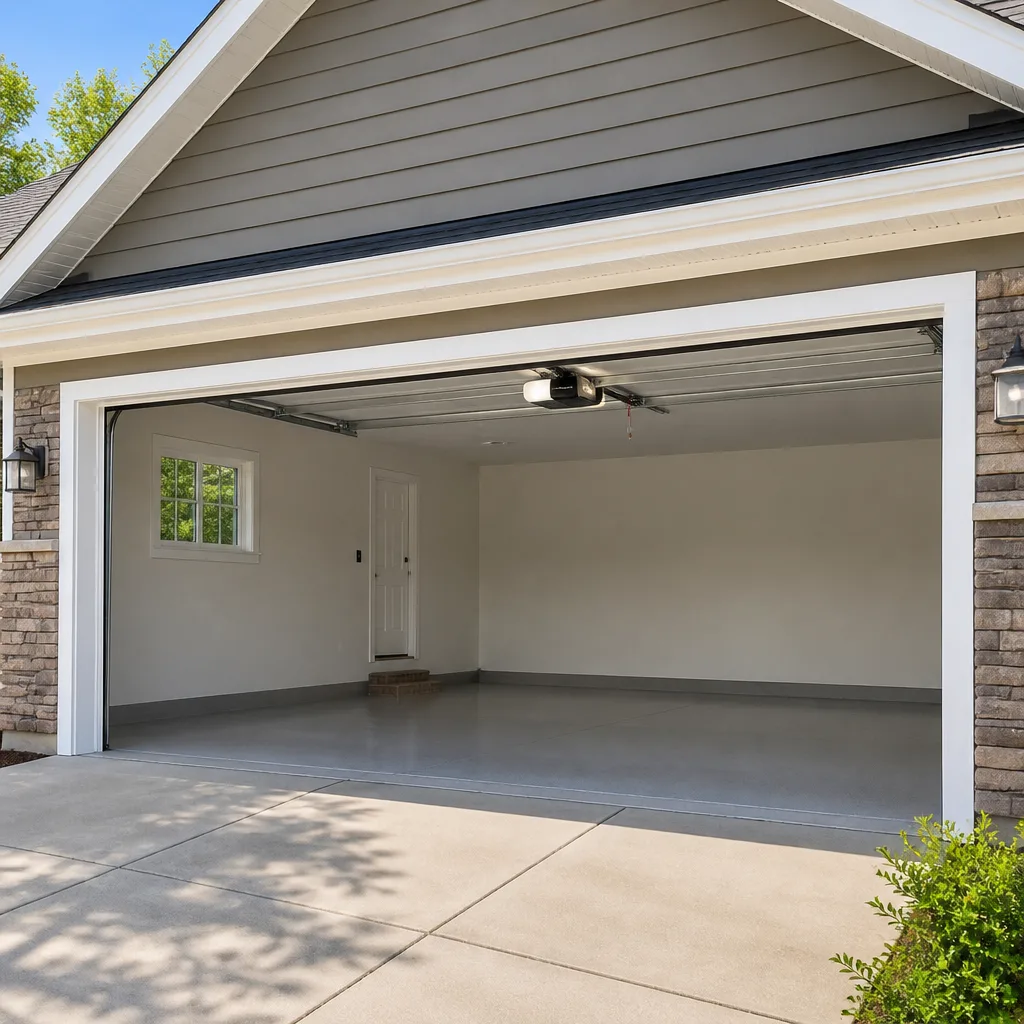 Chamberlain openers
Full 25-point door and opener safety check with every visit - springs, cables, rollers, tracks, and your LiftMaster or Chamberlain opener included
You get a price before we start. It does not change when the pro arrives.
Get your free estimateDIY vs Professional Garage Door: The Manassas Homeowner’s Decision Guide
Most homeowners assume the DIY question comes down to confidence. If you’re handy, fix it yourself; if you’re not, call someone. That framing gets people hurt and gets other people paying for repairs they could have handled in twenty minutes. The real dividing line is mechanical, not personal: does the task involve stored energy, structural load, or a system where a small mistake causes a large failure? A torsion spring stores enough force to break bones. A bottom seal stores nothing but a friction fit. Those two jobs sit at opposite ends of the same door, and treating them the same is where DIY decisions go wrong. This guide draws the line component by component so you can decide what’s genuinely safe to tackle in a Manassas garage and what should never leave a professional’s hands.
Quick Answer
In a Manassas garage, replacing weather seals, rollers, hinges, and standard light bulbs, plus reprogramming a LiftMaster or Chamberlain opener, are legitimate DIY tasks with real savings. Torsion springs, extension springs, cables, drums, and anything involving the door’s balance or track alignment carry stored mechanical energy or structural load and belong to a trained technician. The dividing line is stored energy, not difficulty.
Styles & brands we work with
- Raised-panel steel
- Carriage house
- Modern flush
- Full-view glass
- LiftMaster openers
- Chamberlain openers
Table of Contents
- Which garage door repairs are safe to DIY?
- Why torsion springs are different from every other part
- DIY vs professional cost comparison for Manassas homeowners
- Tool requirements: how to screen yourself before starting
- Homeowner’s insurance and DIY garage door work in Virginia
- The hybrid approach: prep work plus professional repair
- How Manassas housing and climate shape garage door wear
Which garage door repairs are safe to DIY?
The quickest way to answer this for your own door is to ask one question about each part: does it hold tension, weight, or alignment? If none of the three, it’s usually a reasonable DIY task. If it holds any of them, it usually isn’t.
Here’s how the components break down in practical terms. This is the framework our technicians use when a homeowner calls asking whether something is worth doing themselves. We tell them straight, because spending an hour on a roller replacement that saves a service call is a good outcome for a Manassas homeowner, and getting talked into it on a spring is a dangerous one.
DIY-eligible tasks (with the right tools and a few precautions)
- Bottom weather seal replacement. Slides out of the retainer, slides back in, no stored energy. The most common DIY job we see.
- Roller replacement. Nylon rollers wear and get noisy. Replacing them with the door fully down and locked is manageable for a homeowner with basic tools.
- Hinge replacement. Standard hinges on sectional doors are held with screws and carry no tension. If a hinge is bent from impact, swap it.
- Opener programming and remotes. Re-pairing a LiftMaster or Chamberlain remote, adding a keypad code, or resetting Wi-Fi on a smart opener is software, not mechanical work.
- Light bulbs and battery backup. Standard opener maintenance, no risk.
- Visual inspection and lubrication. Checking for frayed cables, worn rollers, and rust on springs, plus applying a proper garage door lubricant to hinges, rollers, and tracks (not the springs or the photo-eye lens).
- Photo-eye alignment. If the door won’t close and the light is blinking, the safety sensor is misaimed or blocked. Re-aiming is a screwdriver job.
Professional-only tasks
- Torsion springs. Stored energy, high tension, and no safe way to release it without the right winding bars and technique.
- Extension springs. Same stored energy in a different orientation, and they’re the ones that tend to fail violently when they go.
- Cables and drums. Cables carry the door’s weight and are under tension every second the door is up. A cable that slips can drop the door.
- Track realignment and panel replacement. Both involve weight and alignment. A door off track is a structural problem, not an adjustment.
- Opener gear and drive replacement. Not because it’s dangerous, but because a stripped gear, a worn belt, or a dead logic board requires diagnosis, and swapping the wrong part costs more than the original repair would have.
If you’re not sure which category you’re in, that’s the signal to stop. A garage door in Manassas isn’t a complex machine, but it is a machine with stored energy, and the parts that carry that energy are the parts that earn the professional designation.
Why torsion springs are different from every other part
A garage door spring stores enough mechanical energy to lift a door that weighs several hundred pounds, several times a day, for years. That energy doesn’t disappear when the spring breaks. It’s released. When a torsion spring snaps, the force can throw winding bars across a garage and cause serious injury to anyone standing in the path. That’s not a disclaimer; it’s the reason spring work is a distinct category.
What surprises a lot of homeowners is how routine spring failure is. A torsion spring is rated in cycles, not years, and a busy household running the door four times a day wears through that cycle count faster than a quiet one. In our experience, the springs on Manassas doors in high-traffic households tend to fail in the early morning or late evening, usually on the first or last cycle of the day. When it happens, the door goes up limp or won’t move at all, and the opener motor whines without lifting anything.
There is no safe DIY path from “spring is broken” to “spring is replaced” without winding bars, the correct spring size, and the experience to know how many turns the new spring needs. If you wind too few, the opener drags and burns out. If you wind too many, the spring is over-tensioned and fails early or throws the door off balance. A professional doesn’t guess at the count. We read the door’s weight, match the spring, and set it to spec. The same is true for garage door spring repair regardless of whether the spring is torsion or extension.
One more point on springs: never use a broken spring as an excuse to run the opener “just once.” The opener is not rated to lift the door unsupported, and running it against a dead spring can strip the gear, break the belt, or burn out the motor. That single attempt can turn a spring replacement into a spring plus opener replacement.
What to check instead of touching the spring
You can look at a torsion spring safely from a distance: if you see a visible gap in the coil, the spring has broken. You can also test the balance of the door without any tools. Pull the opener’s manual release, lift the door halfway by hand, and let go. A balanced door stays put. A door that slams down or rises on its own has a failing spring or cable, and the next step is a call, not a repair attempt.
DIY vs professional cost comparison for Manassas homeowners
The honest comparison isn’t just the part price. It’s the part price, plus the tool cost, plus the risk of a second repair if the first one goes wrong. For the DIY-eligible list, the math usually favors DIY. For anything on the professional list, it almost never does.
Here’s how the two approaches compare on the parts that homeowners most often consider tackling themselves. The typical estimate column reflects what a written estimate from a professional garage door company in Manassas looks like for the job as a whole; the DIY column is the part cost and the realistic worst case if the job goes sideways.
Cost and risk by task
| Task | DIY part cost | Typical professional estimate | DIY risk if it goes wrong |
|---|---|---|---|
| Bottom weather seal | Low | Low | Wrong size seal, water intrusion, minimal secondary damage |
| Roller replacement (full set) | Moderate | Modest | Wrong-size stem, binding door, track damage |
| Hinge replacement | Low | Low | Loose screws in a stripped hole, hinge misalignment |
| Opener remote / keypad programming | Low | Low | None if the old remote is kept |
| Torsion spring (one spring) | Moderate | Moderate | Serious injury, opener damage, door-drop damage |
| Torsion spring (matched pair) | Higher | Higher | Same as above, and a mismatched pair wears the door unevenly |
| Cable replacement | Moderate | Moderate | Door drop, bent panels, injury |
| Opener drive / gear replacement | Moderate | Moderate | Wrong part, repeated failure, motor damage |
Two things about that table matter more than the numbers. First, the DIY-eligible jobs still cost real money in parts, and a homeowner who buys the wrong-size seal twice has usually spent as much as a service call. Second, when a spring is replaced, it’s usually replaced as a matched pair, not one spring. Springs wear together and carry the same cycle count, so replacing one and leaving the other means the older spring fails not long after. Our guide on garage door repair covers this in more detail, but the practical takeaway is that a spring estimate should quote one spring or a pair; if you’re comparing estimates and one lists one spring and the other lists two, you’re not comparing like for like.
There’s also a secondary damage pattern worth knowing. A homeowner who replaces a hinge with a hinge that isn’t rated the same way stresses the neighboring hinges and the panel around them. A homeowner who replaces a roller with one that’s slightly too short in the stem binds the track and ends up with a door that reverses halfway down. These are the repairs that turn a small DIY win into a professional callback, and they’re the reason we always ask what was already tried before we quote.
Tool requirements: how to screen yourself before starting
“Basic hand tools” is a phrase that hides a lot. Here’s the actual list for the legitimate DIY jobs, so you can look in your garage and decide honestly whether you’re equipped.
For a bottom seal replacement
- Measuring tape (the seal’s retainer width matters, not the door width alone)
- Utility knife with a fresh blade
- Straightedge or a scrap of wood to cut against
- Needle-nose pliers for pulling the old seal out of the retainer
- A second person for the last two feet on a wide door
For a roller replacement
- Two locking pliers (one to hold the door down, one to hold the hinge)
- Adjustable wrench or the correct driver for the hinge screws
- A stepladder tall enough that you’re not reaching overhead
- A spray lubricant for the new roller’s stem
- A second person to support the panel while the roller is out
If you don’t have locking pliers, or you don’t have a second person, rollers can wait. That’s the same self-screen a professional would apply before starting. Our technicians have up to 14 years of experience, and the first thing any good technician checks is whether the door is supported before the roller comes out.
What the tool list tells you about springs
Winding bars, proper size, correct spring, cycle rating, and the knowledge to read a door’s balance are what a spring job requires. That’s a specific tool set most homeowners don’t own and shouldn’t buy for one job. The tool list is the clearest signal of all: if the job needs a tool you don’t have and wouldn’t use again, it’s a professional job.
Homeowner’s insurance and DIY garage door work in Virginia
Here’s where the DIY conversation gets practical in a way most guides skip. When a homeowner’s mistake on a garage door causes damage, a claim starts asking whether the work was done correctly, and by whom. That question gets uncomfortable fast when the answer is “the homeowner.”
The general pattern is this: standard homeowners policies cover sudden and accidental damage to the home and to other people’s property. Whether that coverage extends to damage caused by work you performed yourself depends on the policy language, and policies vary. What almost always matters is whether the original repair was done to code and by a qualified party. If a self-installed spring fails and drops the door onto a car, a homeowner can expect the claim to at least be reviewed closely. If a self-installed opener was wired incorrectly and something gets damaged, the same review applies. The safest approach is to call your insurer and ask specifically how a self-performed repair would be handled before you start, not after.
Two general rules of thumb hold:
- Small maintenance tasks like seals, rollers, and lamps don’t typically raise coverage questions.
- Safety-critical repairs like springs, cables, and operator wiring are the ones where the question of who did the work gets asked.
None of this means you can’t do anything yourself. It means that the insurance side reinforces the same dividing line the mechanical side does: the tasks with stored energy carry a second kind of risk on the back end.
The hybrid approach: prep work plus professional repair
There’s a middle path that saves real money without cutting corners, and it’s the one we recommend most often to Manassas homeowners who are handy but sensible about risk. You handle the prep, we handle the part that carries stored energy. The written estimate covers the repair itself, and your prep work keeps the visit focused on the actual job.
Here’s how to structure it. None of these steps involve touching a spring or a cable; they’re about making the visit efficient.
- Clear the garage floor. A technician can work twice as efficiently with a clear bay. Move anything under the door and anything within a few feet of the tracks.
- Photograph the door and opener. A photo of the door from the inside, the spring color code if you can see it safely from the ground, and the opener’s model plate gives the company the information to quote accurately before the visit.
- Write down what you’ve already tried. If you replaced a bottom seal or a hinge and the problem persists, say so. That one sentence can save a technician the time of re-diagnosing a solved issue.
- Do the safe DIY jobs yourself first. Replace the bottom seal, swap the worn rollers, replace the light bulbs. These aren’t the jobs a service call is worth spending on if you can do them yourself.
- Book the spring, cable, or opener job as a scheduled repair, not an emergency. A measured, scheduled job gives the technician time to bring the right part the first time. Emergency calls are for doors that are stuck, off track, or open, not for planned maintenance.
The prep list also tells the company something useful: a homeowner who’s done the small jobs is a homeowner who can tell the difference between “worn roller” and “broken spring,” and the quote will reflect that clarity. If you’ve done the prep work and you’re ready to schedule, garage door opener repair and spring work can usually be quoted from a short call and confirmed on-site. From a full new door to a single snapped cable, one call handles it; our team knows every brand on the door, whether it’s a LiftMaster, a Raynor, a Genie, or a Chamberlain.
How Manassas housing and climate shape garage door wear
Manassas sits in a part of Virginia with a genuine four-season swing: hot, humid summers and cold winters with real freeze-thaw cycles. That pattern works on a garage door differently than a mild coastal climate does. Humidity swells and contracts wood-framed door panels and softens weather seals, and cold snaps stiffen nylon rollers and dry out hinge points. The result is that a door in Manassas tends to show roller and hinge wear earlier in the year than homeowners expect, and the seals take more moisture abuse than a door in a drier region.
The housing stock matters too. Manassas has a wide mix of single-family homes, many of them built across several decades of suburban growth, so the doors themselves are a mix of older panels with single-spring setups and newer doors with two springs and modern openers. A single-spring door in a Manassas neighborhood with a busy driveway tends to see spring failure sooner, because spring life is measured in cycles, not years, and a busy household adds a lot of cycles. That’s why we always ask about the door’s daily use before quoting a spring job, not just its age.
The town’s layout also affects priorities. Neighborhoods in Manassas that front busier roads have homeowners who care more about a door that won’t stay up at night. A door left halfway down or propped open isn’t just an inconvenience; it’s a security problem, and that security angle is why we treat a broken spring or a door off its track as an emergency rather than a next-week appointment.
What Manassas homeowners ask us most
The two questions come up repeatedly in this trade. First, whether the door needs a full replacement or a repair, and the honest answer is usually repair unless the panels are bent or rusted through. Second, whether the opener can be fixed or has to be replaced. The answer is almost always that the opener is serviceable; gear, belt, and logic board failures are repairable across every brand we see in Manassas, from LiftMaster and Chamberlain to Genie and Raynor. Our team at Manassas Garage Door Repair Pros works on all eight of the major brands, so the door you already have is the door we service.
Common Mistakes to Avoid
- Running the opener on a broken spring. It’s the single most expensive DIY mistake we see. The opener isn’t rated to lift the door unsupported, and one cycle against a dead spring can take out the gear, the belt, or the motor. Leave it down and call.
- Replacing one spring when the pair is due. Springs wear together and carry the same cycle count. A homeowner who replaces one and leaves the other often ends up back in the same spot soon after. Compare estimates on whether they quote a single spring or a matched pair.
- Using the wrong-size bottom seal. The retainer width is what matters, not the visible door width. A wrong-size seal leaves gaps and lets water into a Manassas garage, and it’s the most common reason a “solved” water problem comes back.
- Assuming a misaligned track will straighten itself. A track bent out of alignment by impact or by a door that closed on something will not correct itself, and forcing the door up or down on it bends panels. That’s a professional job, especially if the door is off track.
- Buying a replacement opener before diagnosing the old one. A dead opener is often a failed gear, a worn belt, or a photo-eye misalignment, all of which cost far less than a new unit. Diagnose first.
- Tightening hinges past their rated torque. Overtightening strips the screw holes in the panel, and a stripped hole means the next hinge won’t hold. Snug, not cranked.
- Ignoring a door that reverses on its own. Self-reversing is usually a safety sensor issue, but it can also be a balance problem. Don’t reset the opener to override the reversal; that defeats a safety feature.
See the difference
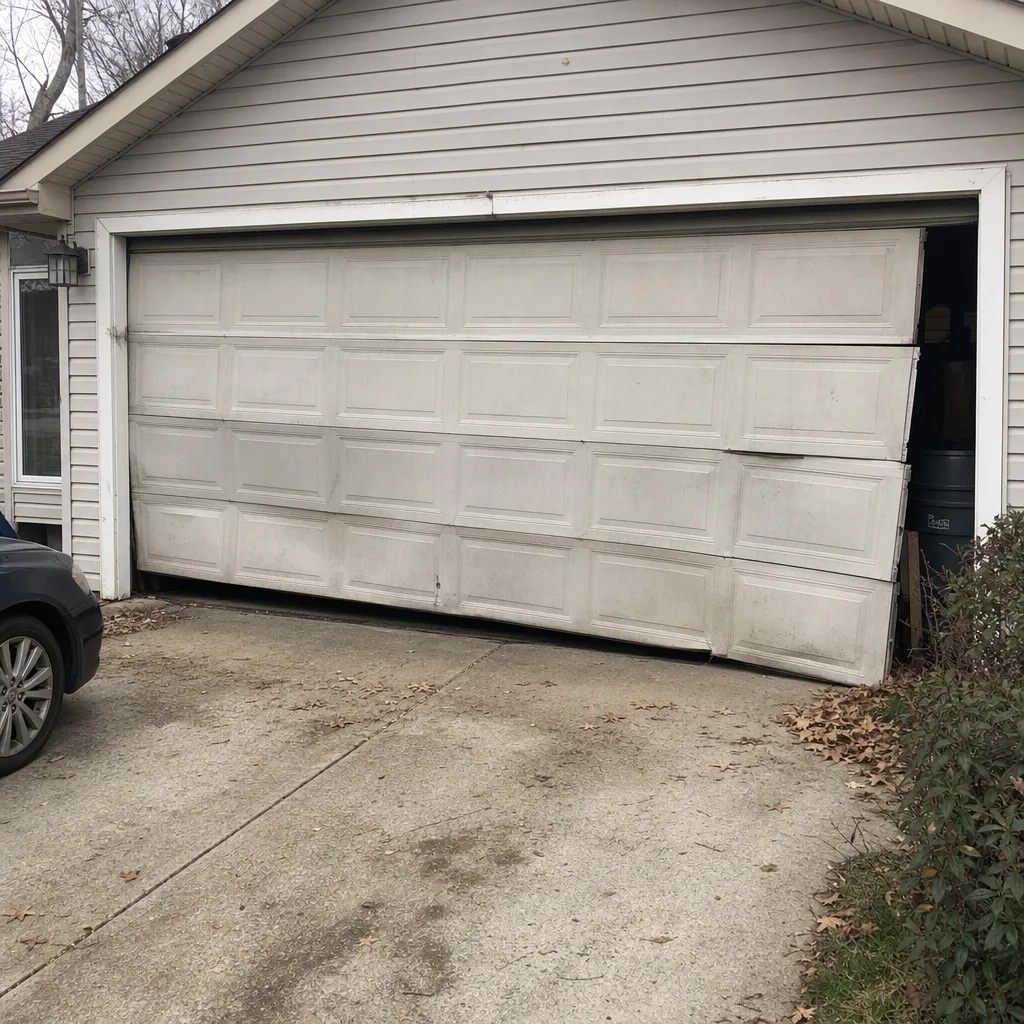 Before
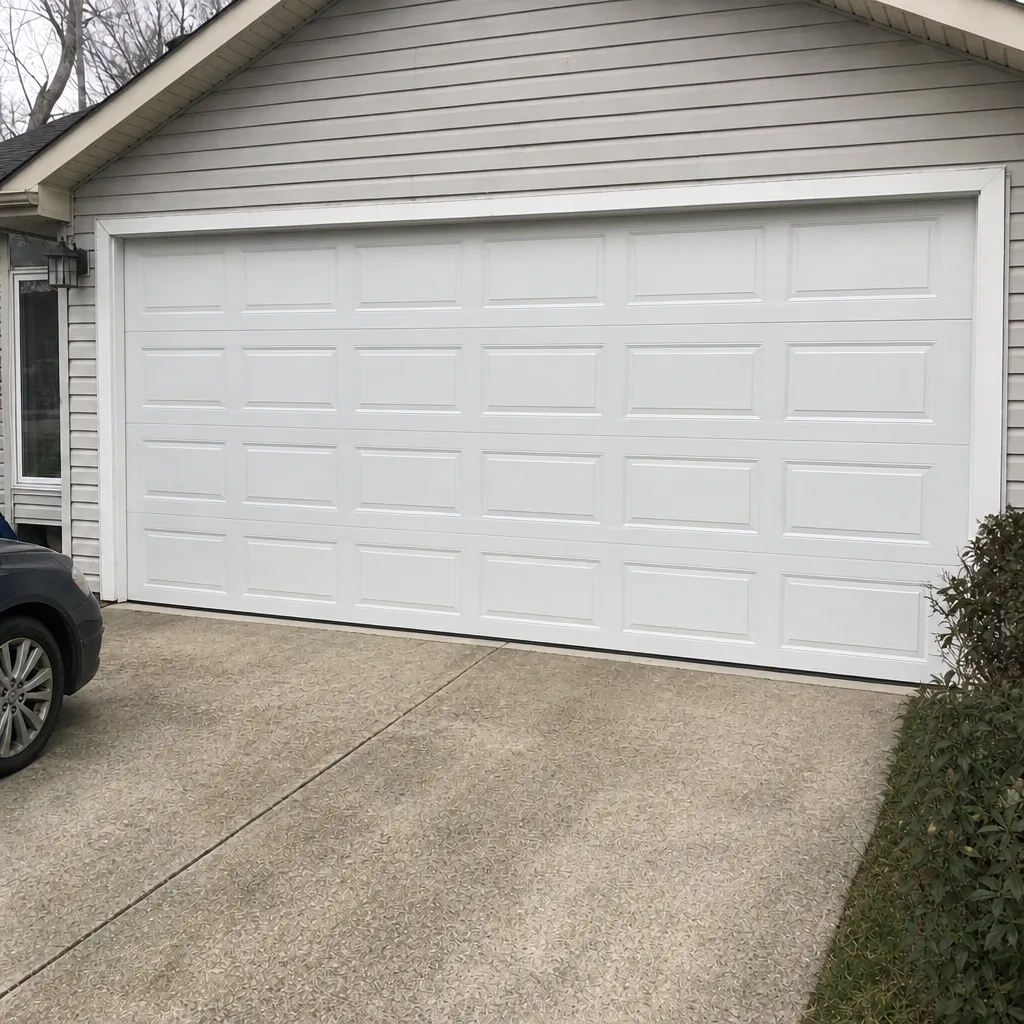 After
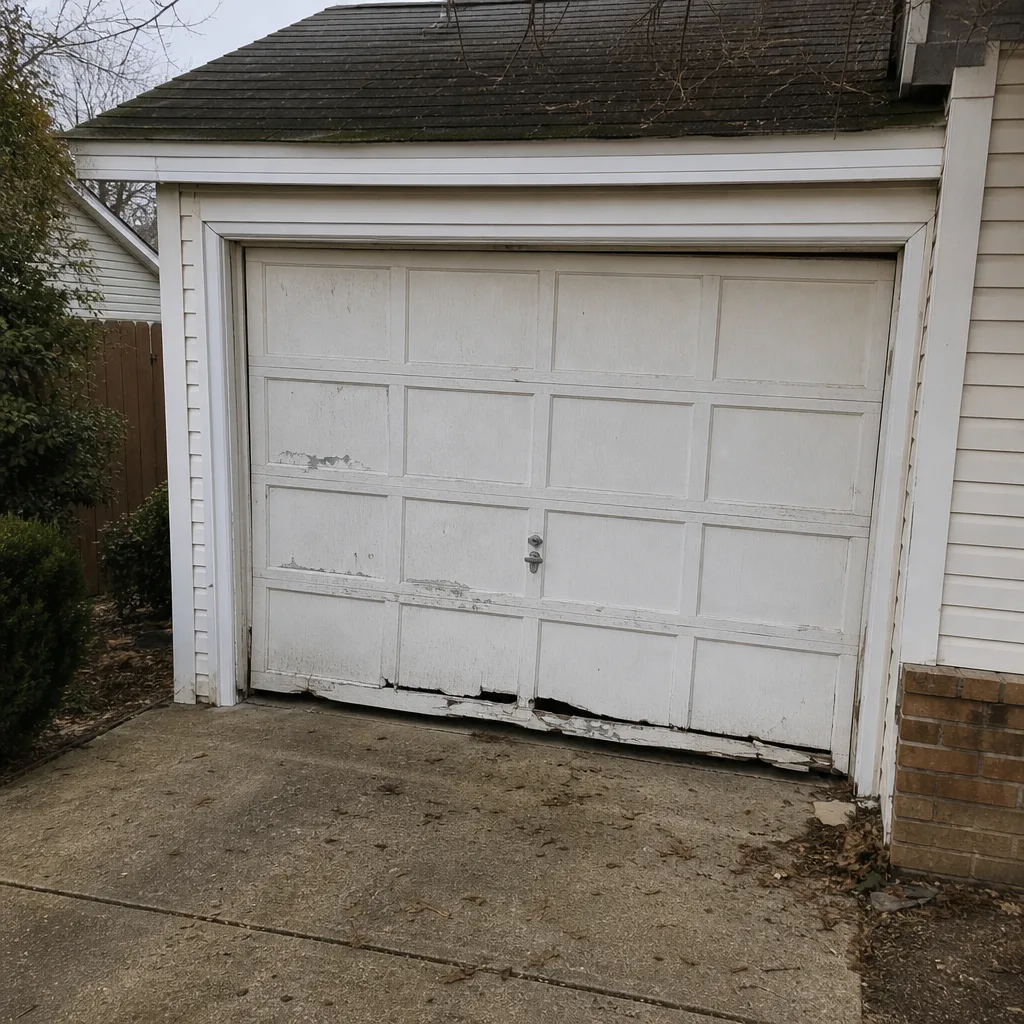 Before
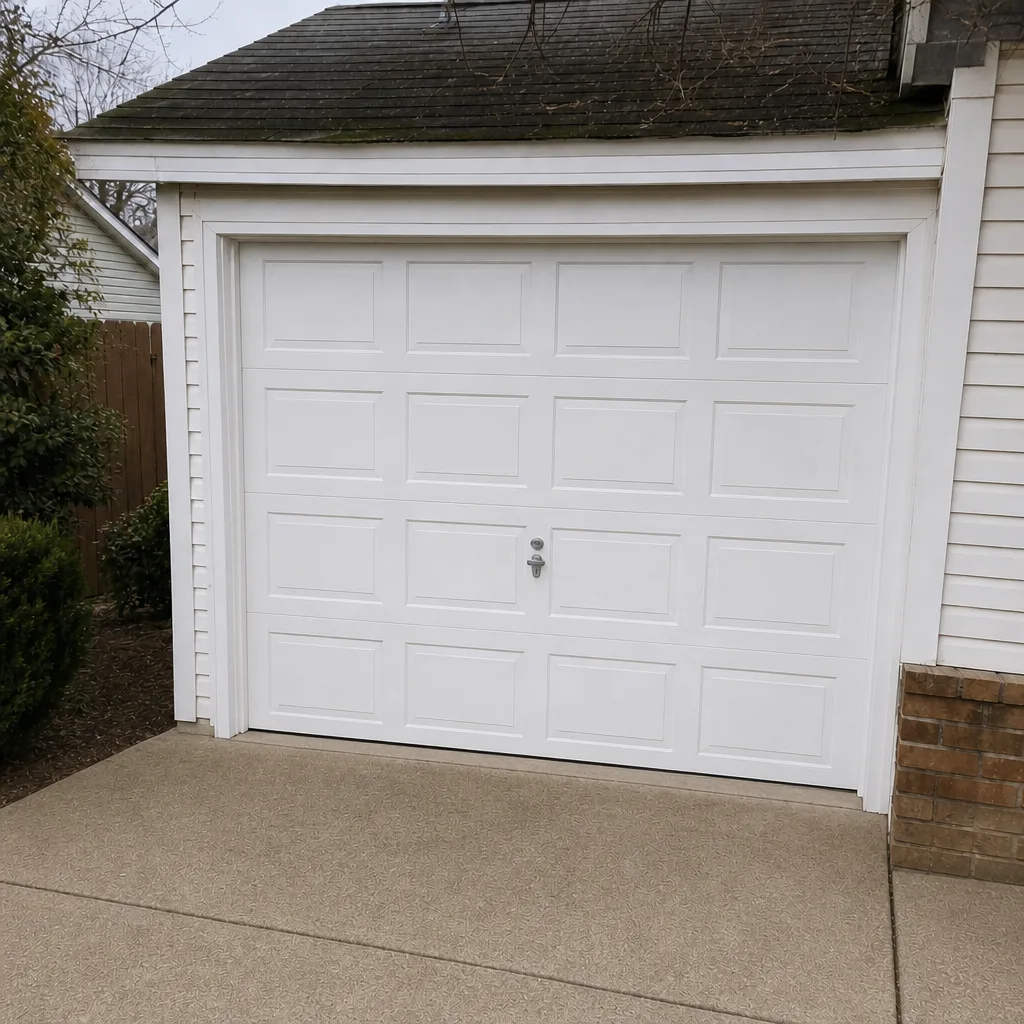 After
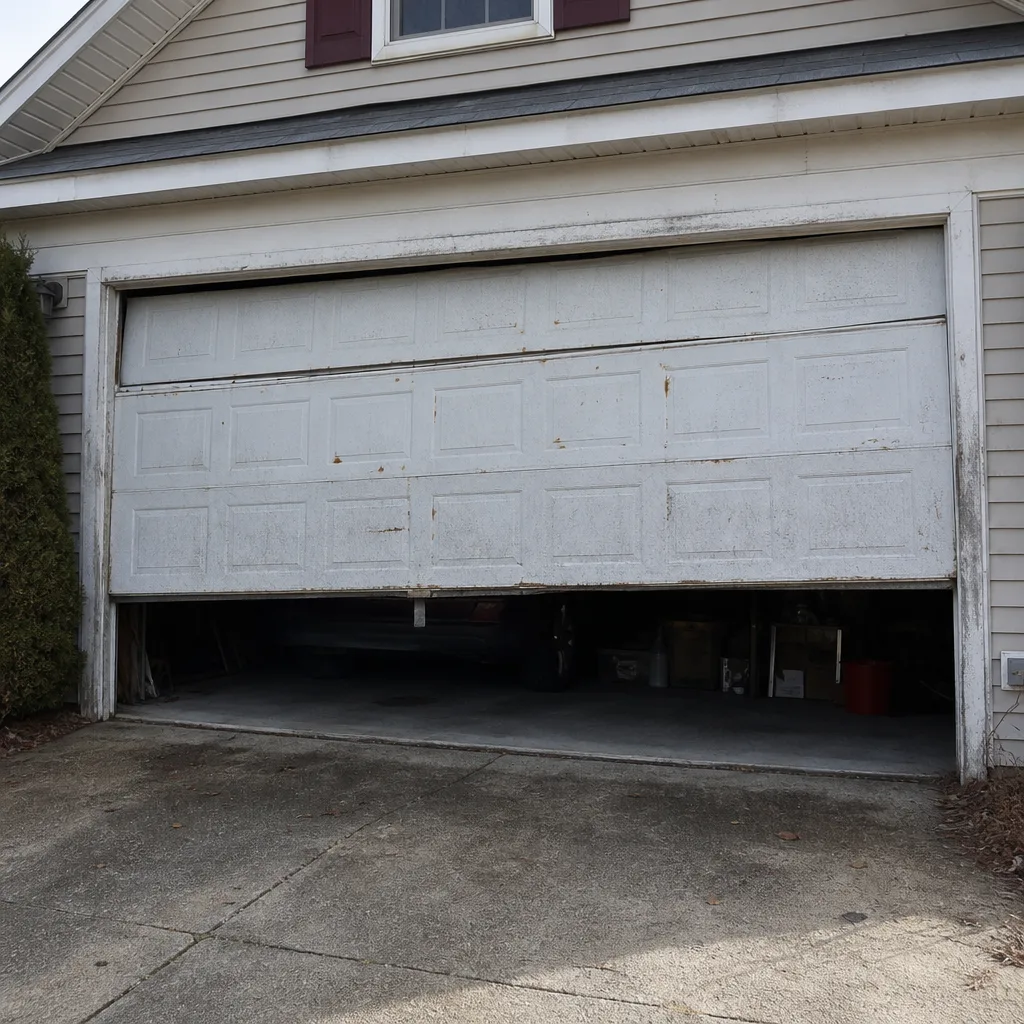 Before
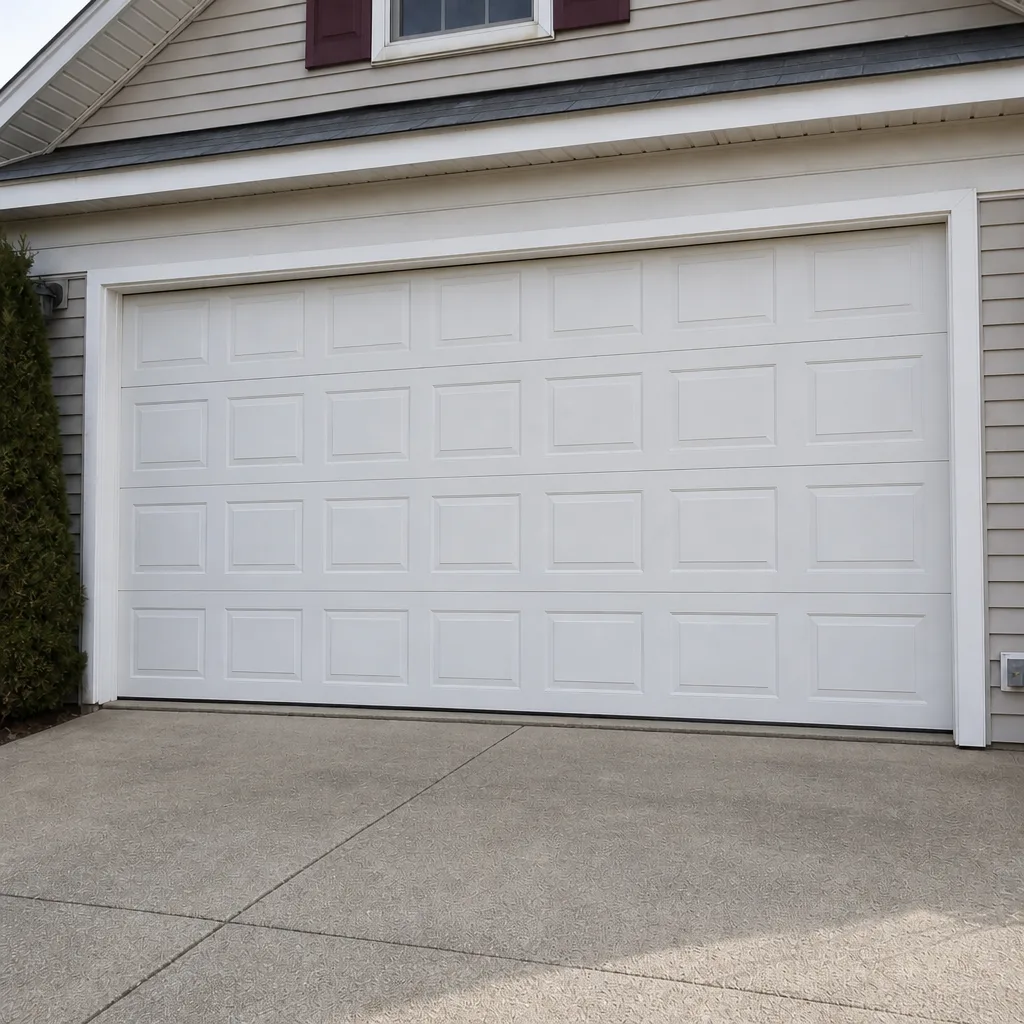 After
When to Call a Professional
Call a professional any time the task involves a torsion spring, an extension spring, a cable, a drum, or a door off track, and any time the opener’s motor is struggling, smoking, or making a noise it didn’t make before. Call if the door won’t move by hand with the opener released, if the door reverses on its own without an obstruction, or if you simply can’t tell whether the part in front of you is a DIY job or not. That last one is the most common reason people call us, and there’s no shame in it; the honest self-screen is a good thing, not a failure. Manassas Garage Door Repair Pros offers free estimates in Manassas, and we answer 24/7. Fast dispatch from 7am to 7pm, Sunday through Friday. Call (855) 658-4207 and we’ll tell you whether it’s a DIY job or a professional one. If you’d rather get it off your plate, whether it’s a stuck door or a planned replacement, one call handles it.
Frequently Asked Questions
No, and this is the one place in the whole guide where we won’t hedge. A torsion or extension spring stores enough mechanical energy to cause serious injury, and there is no safe DIY path without winding bars, the correct spring size, and the experience to read the door’s balance. Call (855) 658-4207 for an exact quote on spring repair. Estimates are free.
Yes, with two locking pliers, a wrench or the right driver, a ladder, and a second person. Roller replacement is on the DIY-eligible list. Keep the door fully down and locked, support the panel, and don’t force a roller that won’t slide. If the stem length doesn’t match the old one, stop and get the right size.
The written estimate is the price. We quote before any work starts and the agreed price is what you pay; an estimate can change only if the scope of work changes, and that’s discussed and agreed before any additional work begins. Call (855) 658-4207 for an exact quote.
It can. Whether a policy covers damage caused by self-performed work depends on the policy language, and safety-critical repairs like springs and operator wiring are where the question of who did the work tends to get asked. Call your insurer and ask before you start. For the repair itself, call (855) 658-4207 for a free estimate.
A written estimate sets the price, and spring pricing depends on whether one spring or a matched pair is involved. A pair usually costs about twice a single spring because both are replaced together. Call (855) 658-4207 for an exact quote. Estimates are free.
The local pro who does the work is licensed and insured as Virginia requires. We connect Manassas homeowners with independent local professionals who perform the repair, and every estimate is written and agreed before work begins. Call (855) 658-4207 to schedule.
The Bottom Line
The DIY decision for a garage door in Manassas comes down to stored energy, structural load, and alignment, not confidence or skill level. Seals, rollers, hinges, programming, and lubrication are legitimate DIY jobs and saving the service call on those is worth doing. Springs, cables, drums, tracks, and opener drive systems belong to a trained technician, both for the mechanical risk and for the insurance question that comes after a failure. The hybrid approach is the smartest middle: you handle prep and the safe jobs, a specialist handles the high-risk repairs, and the written estimate sets the price before any work starts. We specialize exclusively in garage doors, so the door you already have is the one we know.
Call (855) 658-4207 for a free estimate. We answer 24/7. Fast dispatch from 7am to 7pm, Sunday through Friday.
Written by the team at Manassas Garage Door Repair Pros.