
Last updated November 23, 2026
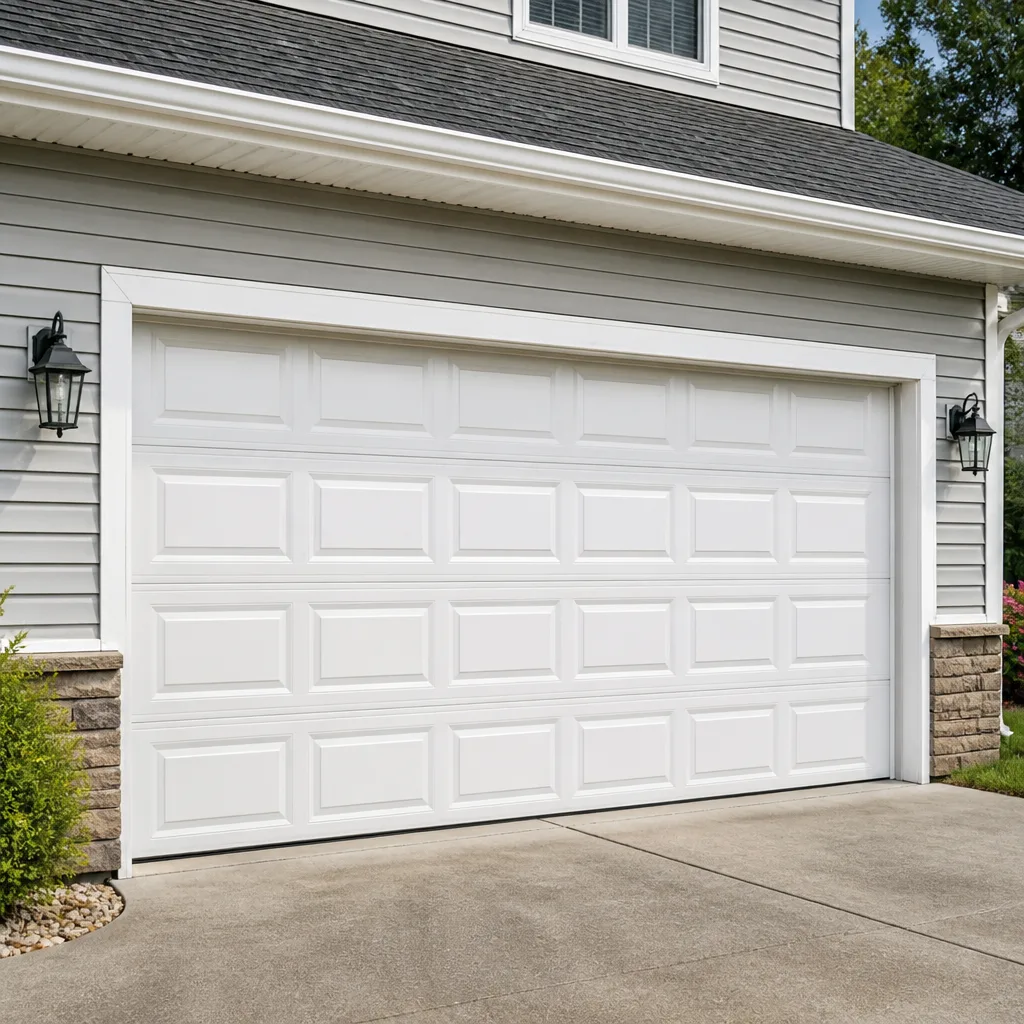 Raised-panel steel
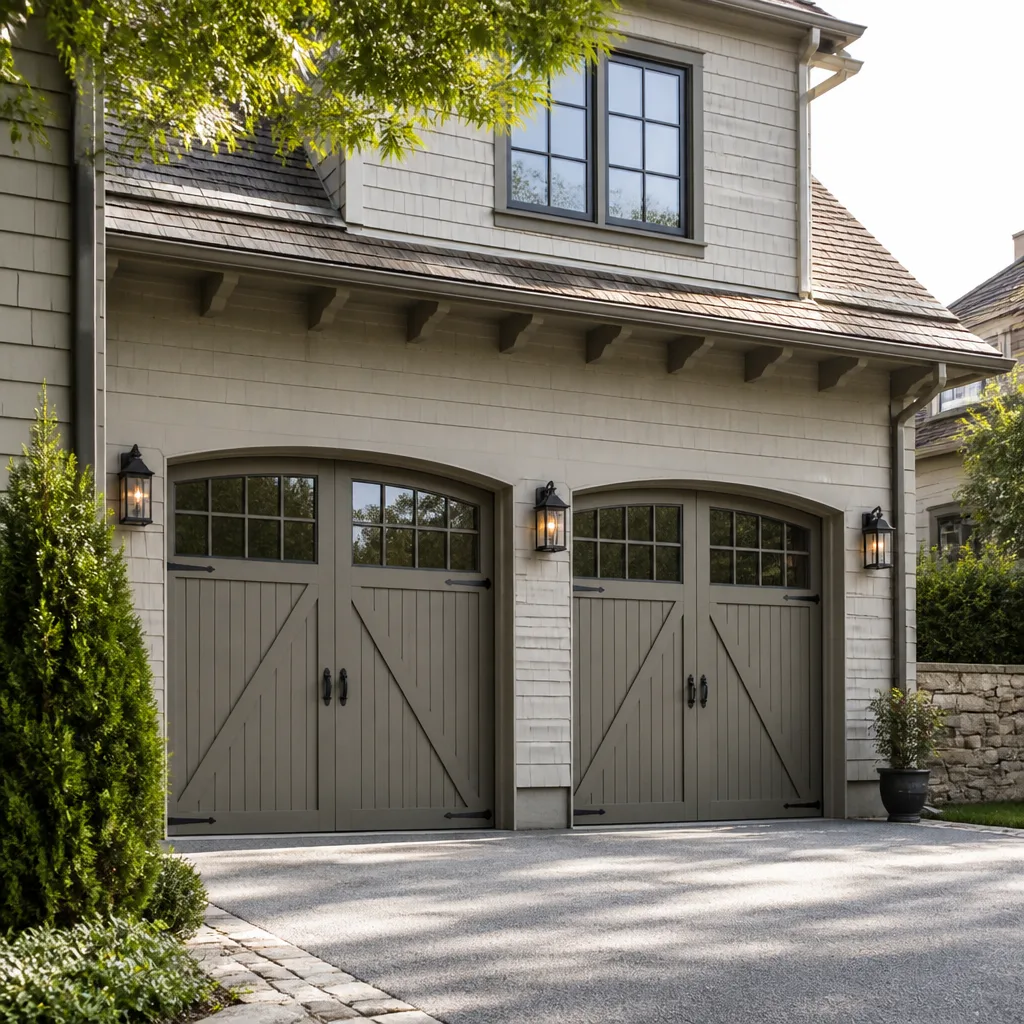 Carriage house
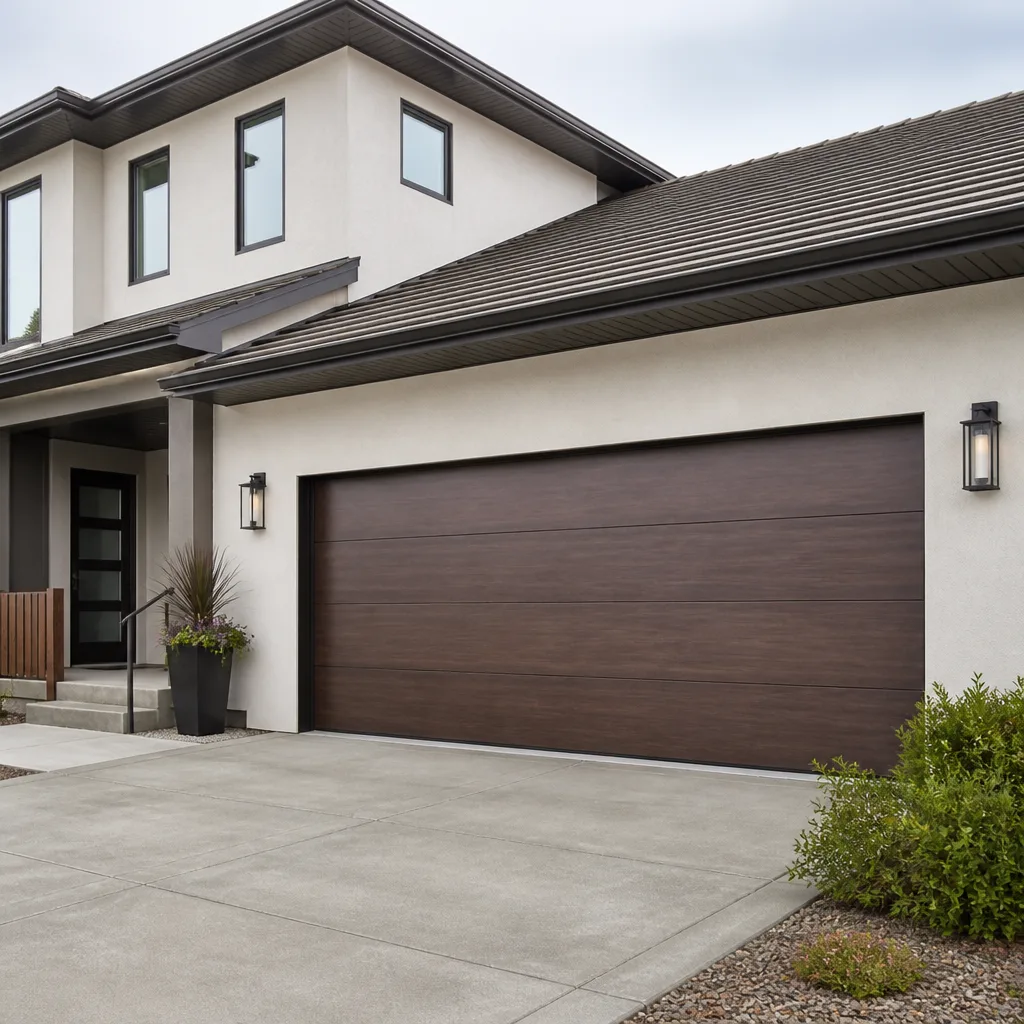 Modern flush
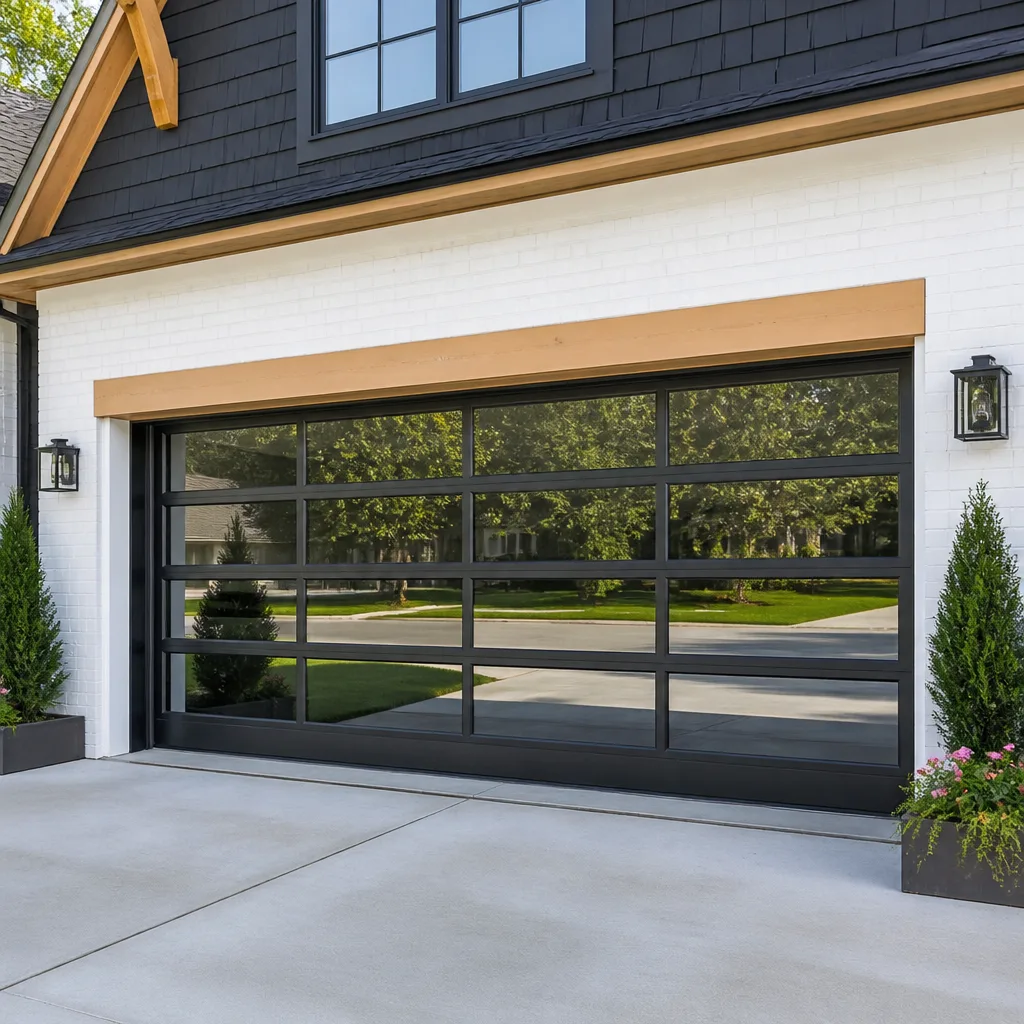 Full-view glass
 LiftMaster openers
 Chamberlain openers
Full 25-point door and opener safety check with every visit - springs, cables, rollers, tracks, and your LiftMaster or Chamberlain opener included
You get a price before we start. It does not change when the pro arrives.
Get your free estimateGarage Door Warning Signs: A Manassas Homeowner’s Reference Guide
A garage door that takes two seconds longer than usual to reach the top isn’t “getting old.” It’s a measurable symptom with three possible root causes, and only one of them requires a technician. That’s the part most homeowners miss: a door rarely fails without warning. It sends signals first, and those signals have meaning. A shudder on the way up, a gap at one bottom corner, an opener that hesitates before it lifts. Each points to a specific component. In this guide, we’ll decode those signals, show you which ones are watch-and-wait and which are stop-using-the-door-today, and explain what happens when an early symptom gets ignored through a Manassas winter or August heat cycle.
Quick Answer
The most serious garage door warning signs are a door that won’t stay up, a visible gap in a torsion spring, a frayed or kinked cable, and a door that comes down crooked or too fast. Those four mean stop operating the door and call a professional. The rest, such as grinding, rattling, a slow opener, or a slight shudder, are usually early-stage and are best handled within the week before they compound. If you’re unsure which category your door falls into, call (855) 658-4207. We answer 24/7. Fast dispatch from 7am to 7pm, Sunday through Friday.
Styles & brands we work with
- Raised-panel steel
- Carriage house
- Modern flush
- Full-view glass
- LiftMaster openers
- Chamberlain openers
Table of Contents
- Decoding the Sounds: What Each Noise Actually Means
- Visual Warning Signs You Can Spot Without Tools
- Urgency Tiers: What to Watch, What to Stop
- How Warning Signs Compound: 30, 60, and 90 Days
- Why Manassas Weather Wears Doors Differently
- Opener Symptoms That Get Misread as Door Problems
- A Seasonal Checklist for Manassas Homeowners
- Common Mistakes to Avoid
Decoding the Sounds: What Each Noise Actually Means
A garage door runs on a small number of moving parts: springs, cables, rollers, hinges, and the opener’s drive system. Each one produces a distinct sound when it starts to fail, and that sound is diagnostic. In our experience, homeowners describe the same four noises over and over, and each traces back to a short list of likely causes. Here’s how we rank them.
Grinding, usually at the start or end of travel. This is most often roller bearings that have dried out or worn flat, or a torsion spring that’s lost its lubrication and is binding on itself. Less often, it’s a bent track section the rollers are scrubbing against. Probability ranking: roller wear first, spring friction second, track damage third.
Popping or a loud bang from above the door. A single sharp pop in the middle of operation is usually a torsion spring slipping a coil or a hinge plate shifting. A bang with the door suddenly feeling very heavy points to a spring that has broken. That’s a stop-operating signal, not a keep-an-eye-on-it signal.
Scraping along one side. Almost always a misaligned track or a roller that has come out of its channel. The door is riding metal on metal. Left alone, this wears the roller stem and the track face, and the repair grows from one part to several.
Rattling that wasn’t there before. Loose hinge bolts, a failing opener chain, or worn nylon rollers with too much play. Often the cheapest of all the sounds to address if it’s caught for what it is: a loose fastener or a worn roller rather than a structural problem.
One note on the spring sounds: high-tension torsion springs store enormous energy, and the loud bang of one letting go is the door telling you it’s now held up by the opener alone. Don’t test your luck by running it again. That’s exactly the situation our garage door spring repair work exists for, and it’s a job for trained technicians, not a weekend project.
Visual Warning Signs You Can Spot Without Tools
You don’t need a gauge or a wrench to catch most garage door failures early. A two-minute visual pass on the hardware catches the majority of problems before they become emergencies. Here are the indicators we look for, in the order they tend to appear.
- Cable fraying. Look at the cables that run down each side of the door. The wire should look smooth and tight. Frayed strands, a bird’s-nest kink, or a cable that looks slack is a stop-operating sign. A snapped cable can whip, and the door becomes unbalanced.
- Spring gap formation. A torsion spring above the door should look like one continuous coil. A visible gap, even a small one, means the spring has cracked. Extension springs down the sides should be intact end to end. Any gap is a do-not-run-the-door sign.
- Roller wear patterns. Run your eyes down the rollers that ride the track. Flat spots, a visibly worn nylon surface, or a roller sitting at an angle instead of square in the channel all indicate wear. Worn rollers are the most common cause of grinding, and they’re inexpensive to replace before they chew the track.
- Hinge looseness. The plates between the door panels should sit flush. Gaps at the screw holes or plates that wiggle when the door is hung mean the fasteners are backing out. Left long enough, the hinge plate cracks.
- A crooked door. Stand back and look at the door as it closes. The bottom edge should meet the floor evenly. One side lagging behind or a bottom corner that doesn’t touch the ground points to a cable, spring, or track issue.
- Bowing panels. Panels that curve inward or outward have taken an impact or lost structural support. This is especially worth checking on steel doors from Clopay or Amarr, where a bent panel can bind the whole door in its track.
None of these require tools. All of them are visible from standing height with the door closed. A quick look every couple of months catches problems while they’re still small.
Urgency Tiers: What to Watch, What to Stop
Not every warning sign carries the same weight, and treating them all the same wastes either money or safety. We sort what we see into three tiers, and that sorting is the most useful thing a homeowner can learn from this guide.
Tier 1: Watch and schedule this week. Grinding, rattling, a slow opener, a door that shudders on the way up, a squeak that’s new. These are early-stage symptoms. Nothing is about to fall, but each one is getting worse with every cycle. Schedule service within the week.
Tier 2: Stop and call today. A door that won’t stay up when you lift it manually, a visible spring gap, a frayed or kinked cable, a door that comes down faster than it should, or a door that derails from the track. These are safety-critical. Do not operate the door. Don’t prop it, don’t force it up, don’t run the opener to “test” it.
Tier 3: Non-emergency but needs correction. A door that closes crooked, a bottom corner that doesn’t seal, a garage that whistles on windy days because the door doesn’t sit flush. Not a safety issue, but these let in cold air, moisture, and insects, and they tend to worsen over a season.
If you’re not sure which tier your door sits in, a phone call sorts it out. The stakes on the dangerous signs are high enough that guessing isn’t worth it. High-tension springs and cables under load can cause serious injury, and a trained technician with the right tools can tell in seconds what a homeowner can only guess at. When your door won’t open, that’s an emergency, and we treat it like one.
How Warning Signs Compound: 30, 60, and 90 Days
A warning sign doesn’t sit still. It advances. Understanding the trajectory is what separates a small repair from a larger one. Here’s the general pattern we see when an early symptom is left alone.
At 30 days. A worn roller is now a worn roller plus a scored track face. A dry spring is now a dry spring plus metal fatigue. What would have been a single-part repair is becoming a two-part repair. The door still works. The noise has gotten a little louder, which the homeowner has gotten used to.
At 60 days. The scored track is now wearing the rollers faster, so the rollers are failing sooner than they should. A cable that showed early fraying has lost strands. The opener, which had been compensating for a door that no longer balances cleanly, is now working harder on every cycle. This is where opener failures start getting blamed on the opener when the real problem is the door’s balance and hardware.
At 90 days. A cable that had been fraying can fail outright. A door that had lost one spring and kept running on the other is now way out of balance and the opener is carrying the whole load. The repair list has grown from a set of rollers to rollers, a cable, a balance correction, and often opener wear-and-tear. What started as one warning sign has become a multi-part job.
This is the reason we tell homeowners to stop thinking of the early signs as cosmetic. They’re the cheapest versions of the repair you’re going to make. Waiting doesn’t just make the repair bigger. It makes the door more dangerous to operate in the meantime.
Why Manassas Weather Wears Doors Differently
Manassas sits in a part of Virginia that gets both real winters and hot, humid summers. That combination stresses garage doors in ways homeowners in milder climates don’t see, and it determines which warning signs show up first and when.
The winter side: hard freezes take a toll on anything with rubber or nylon in it. Bottom seals stiffen and crack. Rollers develop flat spots as the cold thicker lubricant resists spinning, and those flat spots then grind once the weather warms. Cables contract and put more tension on fittings. If a door pulls hard from one side in January, that’s often the cold stiffening the track and the parts together, not a new failure. If the door was fine going into winter and pulls crooked in February, the fix is usually a track and roller adjustment.
The summer side is often harder on the springs. August heat expands the metal and the high humidity accelerates rust on cable fittings and springs. A torsion spring that was already fatigued can let go on a hot afternoon more easily than in a cool month. If you hear a bang in August, that’s the typical culprit.
Manassas’s older neighborhoods, from the brick Colonials near Old Town to the newer builds around Bristow and Gainesville, also see a fair number of wood and wood-look steel doors where the bottom seal or the panel itself takes the weather. Clopay and Amarr doors on those builds are solid, but seals and hardware still age. That’s why we suggest checking the door after the first hard freeze and again after the first August heat wave. Those are the two stress points in a Manassas year.
Opener Symptoms That Get Misread as Door Problems
Half the “my door is failing” calls we get turn out to be the opener, not the door. That’s why it pays to know which symptoms belong to which system. The opener’s job is to lift a door that’s already balanced. When the door stops balancing, the opener starts looking like the problem.
- Door reverses right after touching the floor. Most often a safety sensor issue or a travel limit that’s drifted. Sometimes a small obstruction under the bottom seal. Rarely the door itself.
- Opener runs but the door doesn’t move. A stripped drive gear, a snapped opener chain or belt, or a disconnect that’s been pulled. This is opener-side, not door-side, and is the most common reason a door “won’t open” when the springs are actually fine.
- Door lifts slowly or struggles. Often this is balance, meaning spring or cable, not the opener. The opener is compensating for a door that’s stopped being neutral. Fix the balance, and the opener returns to normal.
- Lights flash and the door won’t close. Usually a safety sensor that’s misaligned or blocked. On smart and Wi-Fi-enabled openers across the LiftMaster, Chamberlain, and Genie lines, the sensor fault is often the simplest fix of all.
That’s why the diagnostic matters as much as the repair. Our garage door opener repair work includes sorting out whether the opener is the cause or the victim. Whatever brand is on your garage, from the Craftsman units in older Manassas builds to current LiftMaster and Genie smart openers, we know it.
A Seasonal Checklist for Manassas Homeowners
The most useful habit to build is a short inspection twice a year, once as fall turns cold and once as summer arrives. Here’s what to check and what each result means.
- Lift the door manually (disconnect the opener first). A balanced door stays put roughly halfway up. If it drops or rises on its own, the springs are out of balance. That’s a spring or cable call, not a DIY adjustment.
- Look at both cables for fraying, kinks, or slack. Any damage is a stop-operating sign.
- Inspect the springs for a visible gap in a torsion coil or a break in an extension spring.
- Run your eyes down the rollers for flat spots, crack, or rollers sitting crooked in the track.
- Check the bottom seal for stiffness, cracking, or a gap at one corner. In Manassas, this is the part that ages fastest through the winter.
- Listen on a test cycle. Grinding, popping, or scraping that wasn’t there last season is a signal to schedule service.
- Push on each hinge plate to check for looseness. Loose hinges are cheap to address and expensive to ignore.
- Test the opener’s safety reverse by placing a small object under the door and confirming it reverses. If it doesn’t, that’s an immediate safety fix.
That checklist takes about five minutes. It’s the single best way to catch the compound failures described earlier before they’ve gotten past the point of a small repair.
Common Mistakes to Avoid
- Assuming a slow door is just “getting old.” It has a root cause. Aging doesn’t explain a door that suddenly takes two seconds longer, or one that pulls on the way up. Ignoring it lets the cause progress from a cheap part to an expensive one.
- Trying to fix a torsion spring yourself. A broken or fatigued torsion spring stores enough energy to cause serious injury. This is the one warning sign we don’t advise homeowners to touch even to “look closer.” Call a technician.
- Running the door after hearing a bang. The bang almost always means a spring has let go. Running the opener on a door whose spring is gone puts all the load on the opener and can damage the door’s balance beyond a simple spring replacement.
- Oiling the track. The track is meant to run dry. Oil collects dust, which turns into grit that wears the rollers. Lubricate the springs and hinges, not the track itself.
- Blaming the opener for a balance problem. If the door struggles to lift, the opener is usually the victim, not the culprit. Replacing an opener without fixing the door’s balance just wears out the new opener.
- Ignoring a bottom-corner gap in a Manassas winter. A door that doesn’t sit flush lets in cold air and moisture, and in this climate that shows up in the garage before long. The fix is usually a seal or a small track adjustment, not a new door.
- Adjusting the opener’s travel limit to make a crooked door “close.” This masks the real issue, usually a cable or spring problem, and can leave the door pushing on the floor with too much force.
See the difference
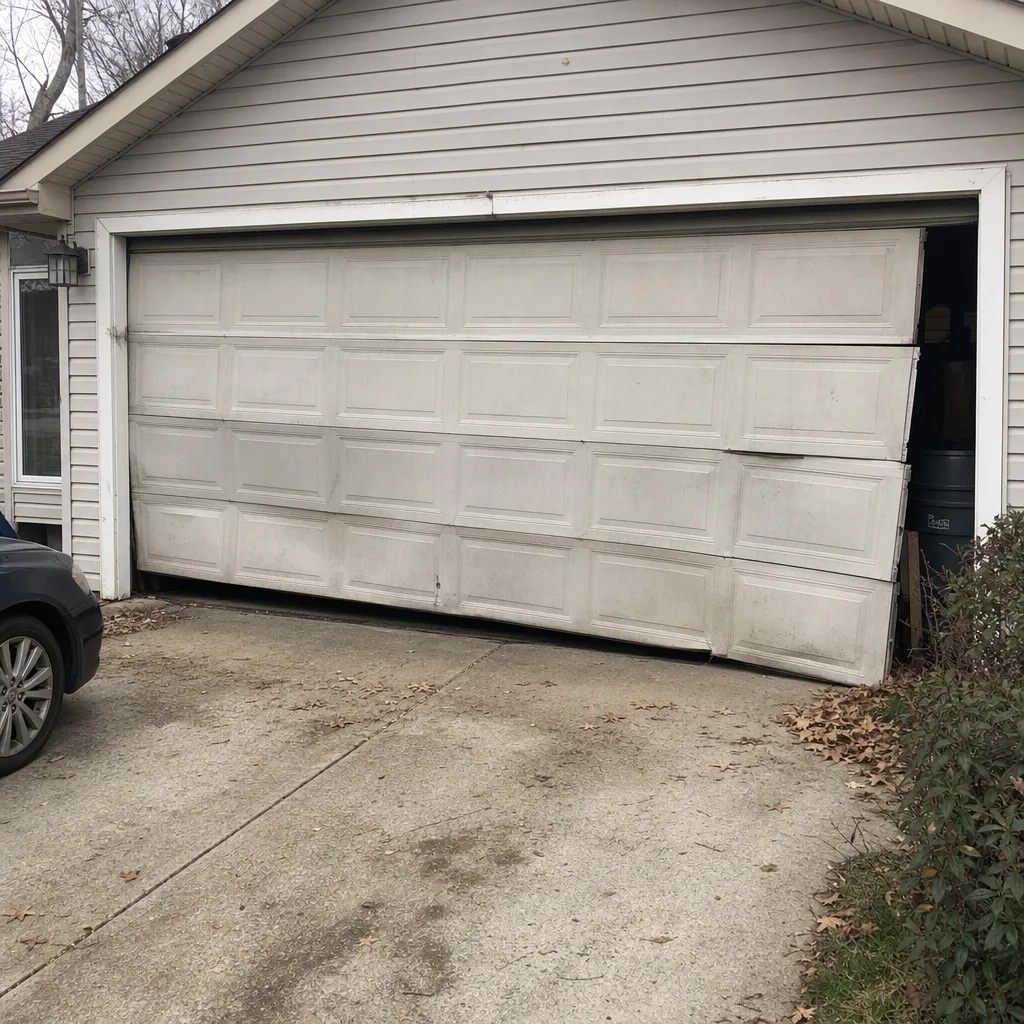 Before
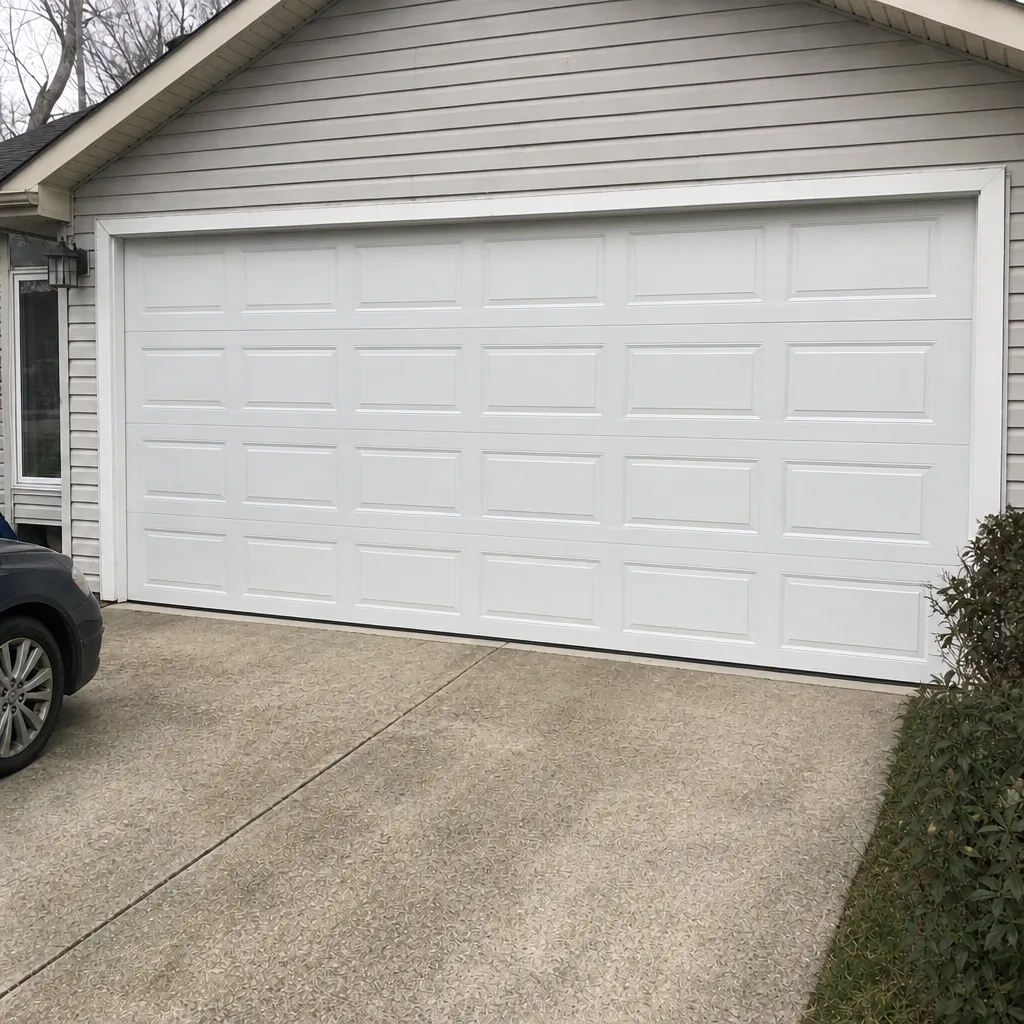 After
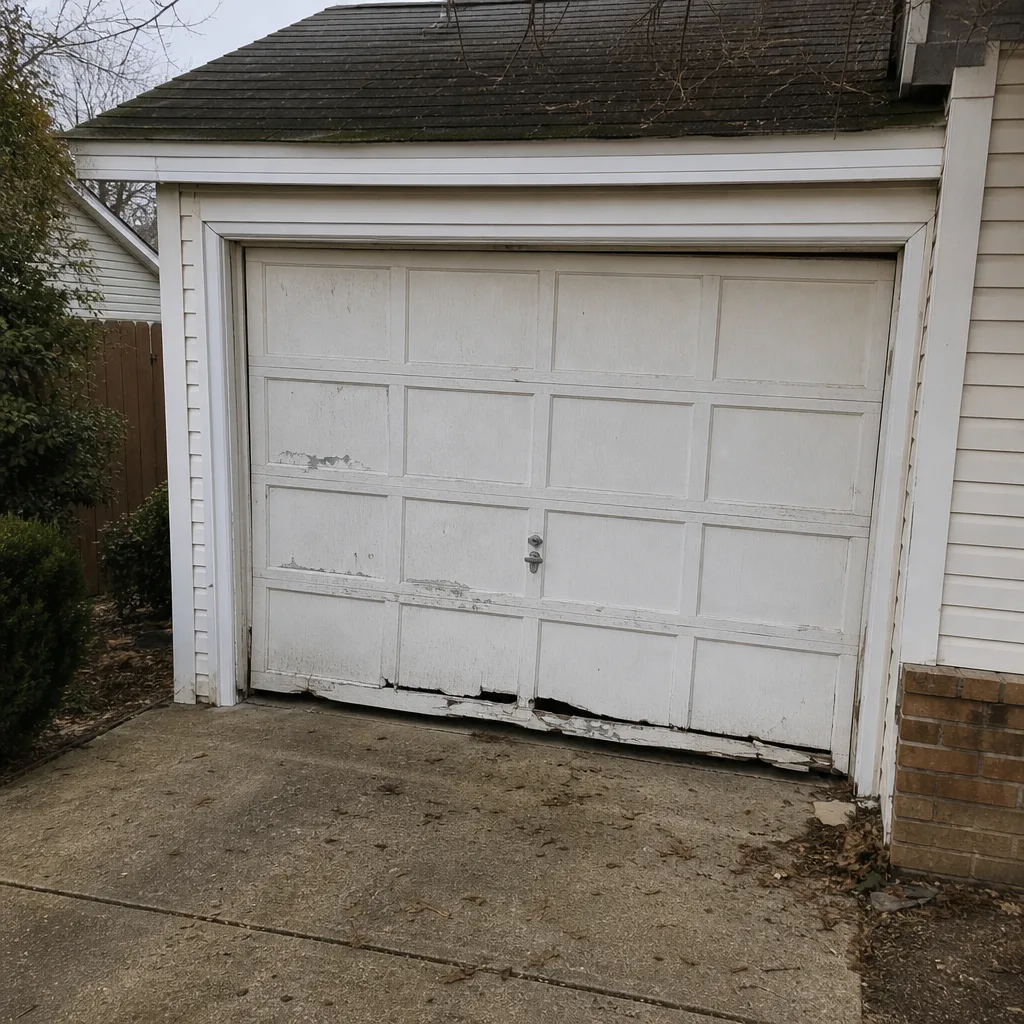 Before
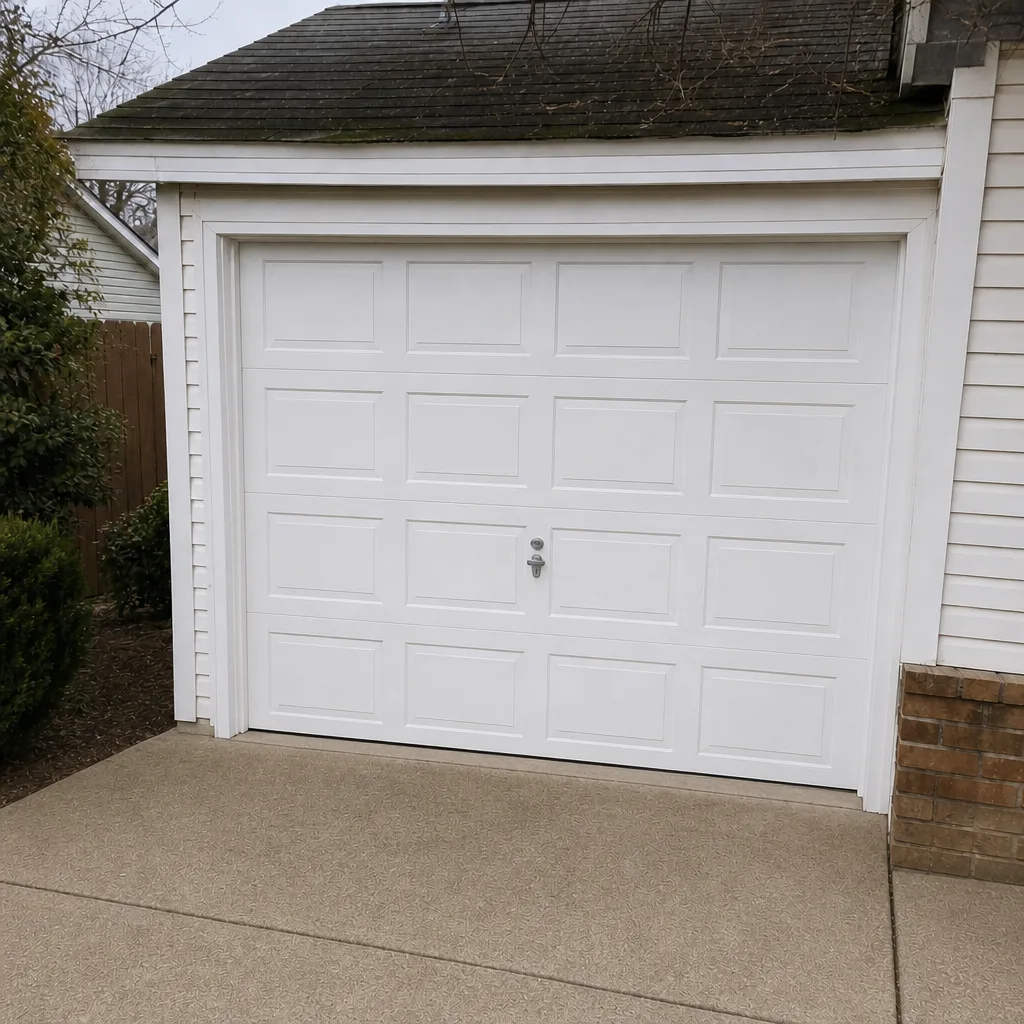 After
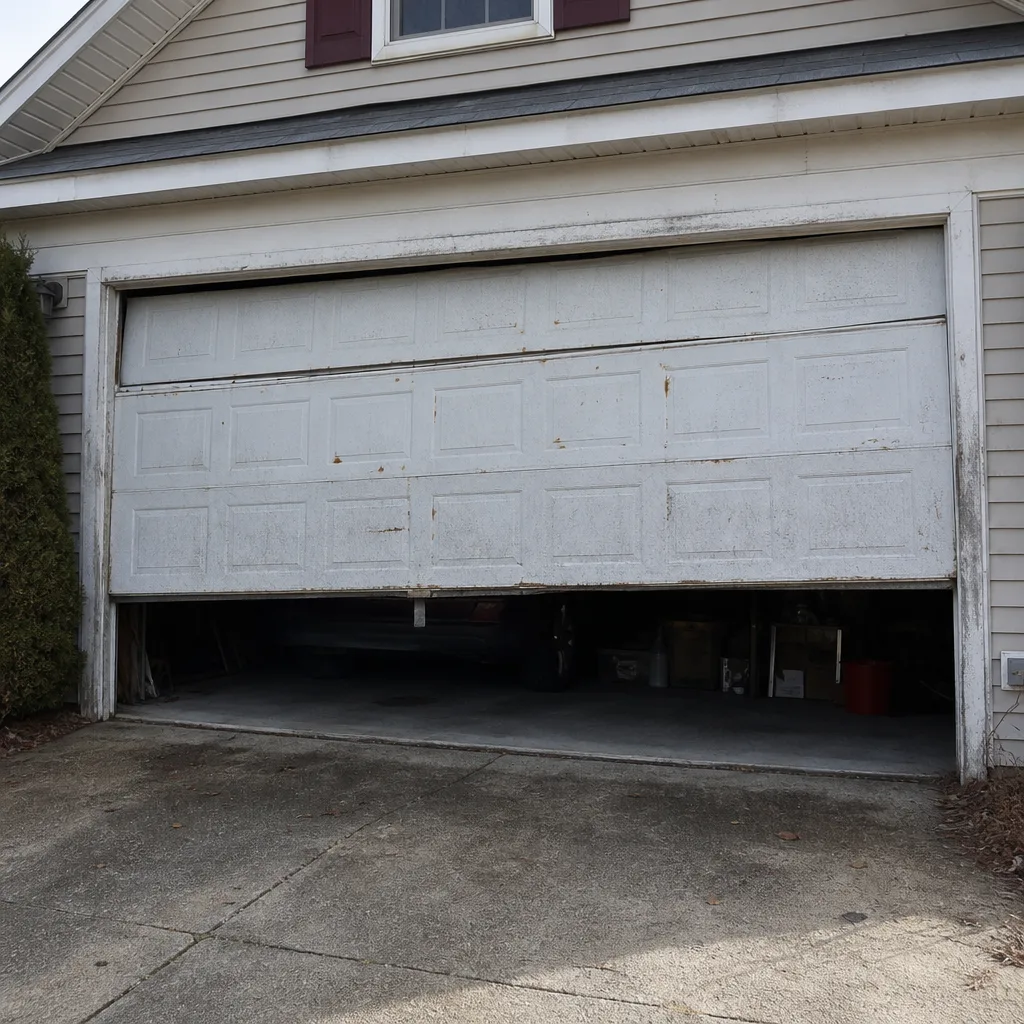 Before
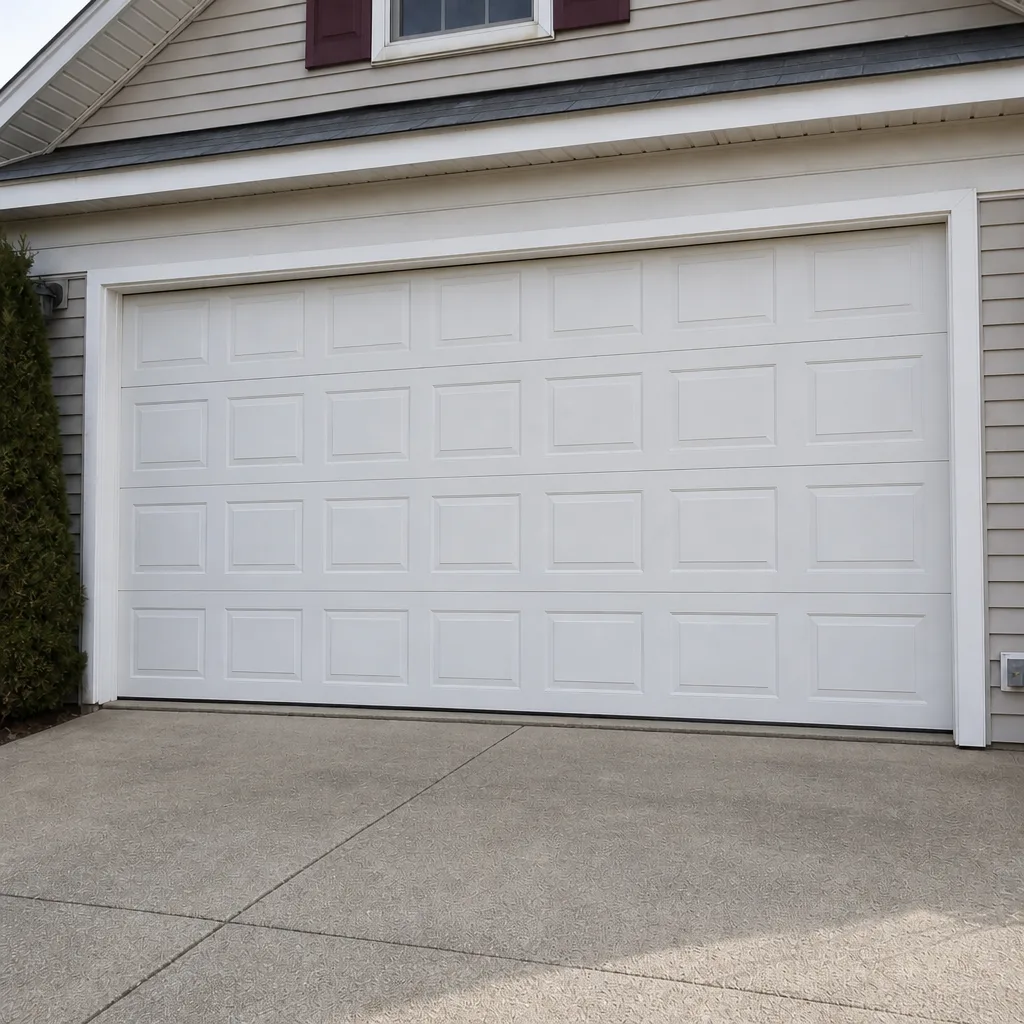 After
When to Call a Professional
Some warning signs are meant to be watched, and some are meant to be called in. The dividing line is simple. If the door won’t stay up, if a spring shows a gap, if a cable is frayed or kinked, if the door comes down fast or crooked, or if anything thumps after a bang, stop operating it and call. Those are safety-critical and no amount of waiting makes them safer. For signs in the watch-and-watch-this-week tier, a quick call is the cheapest way to get the right repair scheduled at the right pace.
Manassas Garage Door Repair Pros offers free estimates in Manassas. Our technicians have up to 14 years of experience, and we work on whatever brand is already on your garage, from Clopay and Amarr to Wayne Dalton and Craftsman. We handle the full range from a single snapped cable to a full new door, so one call covers it. If you want a technician dispatched, we offer fast dispatch from 7am to 7pm, Sunday through Friday. Call (855) 658-4207. We answer 24/7. Fast dispatch from 7am to 7pm, Sunday through Friday. Every quote is agreed in writing before any work starts.
Frequently Asked Questions
Grinding at the start or end of travel, almost always caused by worn or dry rollers. It’s the cheapest sign to fix and the most often ignored. If you hear it, call (855) 658-4207 for an exact quote. Estimates are free.
No. A visible gap in a torsion spring, or a break in an extension spring, means stop operating the door. The spring holds the door’s weight. Without it, the opener is carrying the full load and the door can behave unpredictably. Call a technician before running it again.
Usually yes. A door that’s suddenly slower than usual almost always has a root cause, most often balance or roller wear. It’s not simply “getting old.” It’s worth a diagnosis within the week before the cause advances into a larger repair. Call (855) 658-4207 for a free estimate.
They can. Hard freezes stiffen bottom seals, can cause flat spots on rollers, and put extra tension on cables. A door that was fine going into winter may pull crooked by February, and that’s usually a track-and-roller adjustment rather than a failed spring. Checking after the first freeze catches it early.
It’s usually an opener problem, not a door problem. Common causes are a stripped drive gear, a snapped opener chain or belt, or a disconnect that’s been pulled. Sorting out opener-versus-door is what a diagnostic visit is for, and it’s why we cover both sides of the system.
The visual checks (cables, spring gaps, roller wear, hinge looseness, bottom seals) are safe to do with the door closed. The manual balance and any spring or cable work are not. High-tension springs and cables under load can cause serious injury, so those belong to a trained technician. Call (855) 658-4207 if you’re unsure where your door falls.
The Bottom Line
Your garage door communicates before it fails. A two-second delay, a new grinding sound, a gap in a spring coil, a frayed cable, a corner that doesn’t seal. Each one maps to a specific component, and each one gets more expensive the longer it’s ignored. Sort your warning signs into watch-this-week, stop-and-call-today, or non-emergency, and the repair decisions get clear. Manassas weather makes the spring and fall check worthwhile, since freezes and August heat are the two stress points in the year. If any sign lands in the stop-and-call-today column, don’t test it. Call a specialist. Manassas Garage Door Repair Pros is a dedicated single-trade garage door company, and we cover everything from a snapped cable to a full new door. Call (855) 658-4207 for a free estimate. We answer 24/7. Fast dispatch from 7am to 7pm, Sunday through Friday. The written estimate sets the price, and it’s agreed before any work begins.
If you’re weighing repair against replacement, our garage door repair page walks through the decision. For more on the full range of what our team does across Manassas, visit Manassas Garage Door Repair Pros.
Written by the team at Manassas Garage Door Repair Pros.